I’m already doing that thing I do when I write. Think about what this will look like in a year, three years, ten… and so on. Will this entry sound foolish and naive, like my earliest overseas writings? Will I be surprised at the wit and insightfulness and honesty, like when I came across all those folded up letters from high school? Will it seem trite, or timeless?
It is probably fitting that this experiment begins at 3am, on an insomniac morning of the risen Christ. Maybe that’s all his deal was. He wasn’t dead, just tired. But he couldn’t sleep, so he went for a little wander.
But I digress.
It’s 3 am on Easter Sunday morning and a few hours ago I deleted my Facebook account.
I made the decision based on a few factors. For one, there’s been the news: the data harvests, the bots, the manipulation of elections. Furthermore, there’s the wasted time. Wake up in the morning, time for the Feed. Breaks and lunch, check the Feed. Afternoon Feed and evening Feed and just before bed Feed.
Sitting in a cafe waiting for coffee? Feed.
Out with the lads and they start talking about soccer? Feed.
In a taxi by myself? Feed.
In a taxi with companions? Feed.
Thought of something actually important to broadcast, like an announcement for the pub quiz I host? I might start with the intention of writing that announcement, but then comes the Feed and I forget.
By my math, I would sometimes spend hours per day on the Feed. Not just Facebook, but sometimes Twitter, occasionally Instagram. As with any habit, I rationalized.
This is the 21st century. This is how modern humans spend their time.
What if I miss a world changing event? I don’t want to be last to find out.
How will people know I’m still alive?
How will I know about the latest meme everyone at work talks about?
How else can I get people from high school to marvel at my perfect, exotic overseas lifestyle?
Perhaps the most terrifying of all: what do I do if I get bored?
The answer, I propose, is writing. Not just one- to two-sentence blurbs about something funny I saw, or a dish I ate. Actual, meaningful writing where I bare my soul. Or not. Whatever I feel like doing that day, really.
Those who know me well, know this is not the first time. After my wife left the country in 2016, I dropped off for awhile. A few months I think. Then it was, “I’ll just post the odd tweet, but I won’t engage in the Feed.” Then it was only Twitter content, but no Facebook. Then it was Facebook, but only for promoting events. Before long, total relapse.
The pattern repeated over the last few years. Cold turkey for some days or weeks, then back to the Feed, harder than ever. Just like relapse of other vices, every time I returned, it felt a little more shitty. Less content I cared about, more petty bickering from the political chasm. Fewer dopamine moments, more cortisol.
I found myself mentally muttering “shut up shut up shut up” as I scrolled through all the pettiness. The Right: ranting ad nauseum about guns that don’t kill people, about Europe’s no-go zones, about Her emails, and about the Jesus. The Left, about niche gender identifications, about white male privilege (and what I ought to do with mine), about the cultural appropriation in Hollywood and the Brooklyn food scene, and about Donald Fucking Trump.
Every post was a potential rabbit hole. Do I comment on my cousin’s post to say that guns are in fact the number one cause of gun violence? Or should it be this thread, posted by a friend of a friend from Portland, whom I’ve not seen in a decade? Xi (non-binary pronoun here) says that the white guy who founded Pok Pok has no right to cook that cuisine because he’s not Thai. Do I point out that all recipes in the history of humankind are a result of cultural convergence?
Do I pinpoint their logical fallacies? Their inaccurate data? Their confirmation bias? Their grammar mistakes? Or do I retreat to my mantra?
Shut up shut up shut up.
Articles and podcasts linking social media to depression, these tidbits keep dropping into my life. I’ve been thinking about my choices and my vices. I’ve been thinking about life changes. With my time in Katmandu, the years now, drawing to a close, I think about fresh starts. I feel like it’s going to stick this time. I’m done with the Feed.
A dream woke me, just before I began to write. A bluegrass troupe was visiting the school. I’d been asked to session with one of the pickers. I flaked on the time. Dude was pissed. I found him later and apologized. Oddly, he was married to the actress who played Counselor Troi on Start Trek. They had two kids. The five of us got to know each other and after some friendly banter he asked if maybe I’d like to do some strumming right there. I felt honored, but as I looked for my banjo I realized I’d not practiced playing it in two years. I started to feel embarrassed and ashamed. That’s when I woke up.
Reading about my dreams is about as interesting as reading about anyone else’s dream. At best, it’s boring, at worst, it’s awkward because it starts with something like, “I had this dream about you last night… Oh but it wasn’t sexual…”
Despite that conventional wisdom, I shared this dream to make a point. The dream shook me. I realized I’m not doing much to change the things about myself that I don’t like. I’m not pursuing passions like I once did. Maybe this is a cliché midlife crisis, but whatever it is, I don’t like it and social media’s not doing me a lick of good. Yes, WordPress is still social media, but at least there is no compelling Feed that demands my attention. And I used to write. A lot. So let’s see if I can take all this angst and doubt and struggle and turn it into something that’s actually worthwhile. Rather than hours of scrolling and trolling, let’s use those down times for punching some words into a screen, words that will be read not by 417 friends, family, and friends and family of those friends and family, but by 7 people, according to the WordPress data. Let’s see where this goes.
As I’m back home this month, the inevitable question comes up time and time again.
So when will you come back to teach in America?
Listen, I’ve worked in America. Do you know what it’s like, working in schools here? I mean, yes, my body absorbs a daily onslaught on airborne contaminants and waterborne microbes, I’m surrounded in dust and poverty, and I have to shower with my eyes shut, but even still, this is way preferable to teaching in the US.
As one point of evidence, I present here a series of haikus I wrote while invigilating exams at my last public school. I have to sit on my ass for hours, so do the students. The test takes forever. The school spends months on test preparation (as opposed to you know, teaching and learning). Yet my state is still on bottom for testing, nationwide.
These haikus say it better than I can.
Barren walls cry out
To students and visitors
Learning stops this week
Once taught in wartime
Mortars, car bombs; but no test
Kept kids from learning
Rules say no food or drink
Because apparently no one
Here is a grown-up
Accreditation
The report that disappeared
Like all the others
Minutes tick on by
Make me wish for a razor
To slice out my eyes
In case you’re wondering why I left, here’s one final haiku:
“Keep up the good work.”
Said the evaluation.
On page two: “You’re fired.”
Nowadays, I enjoy a fulfilling classroom position with professional colleagues and managers. Things are better.
Another entry from my time on Bali. I was still annoyingly double-spacing all my periods. Aside from that, it’s an enjoyable read.
Benoa. I hereby retract all the mean things I’ve said about Benoa. Okay, maybe not all of them. It is still a soulless resort town catering to incoming cruise lines chock full of tourists with no desire to immerse themselves in Balinese culture. It is still lined with hotels demanding ludicrous rates that won’t take in a lowly traveler, even on Christmas Eve. But now that I got the “local” edge, Benoa has become a little more fun.
Watu surprised me with this question: “Want to go parasailing?”
I admit, the “sport” has never been on the top of my list, but I’ll try anything once. In a blink, we found ourselves back in the land I swore against last year. Except now, we were backstage to the tourist show. Watu knows someone who runs a tour package business and gets friend prices on campy attractions such as this one. Arriving at the “Jet Set” water sports center (take your minds out of the gutter, Dan Savage fans), we were escorted past tables of wealthy Korean tourists and into a seaside bale laid out with comfy rubber cushions. The manager cheerfully ran down his price list. Not only did they offer parasailing, they also offered scuba, snorkeling, and glass-bottom boat tours to Turtle Island. Best of all, the prices were marked down like a Canadian pharmacy going out of business – the local prices!
Parasailing always seemed silly to me before; it seemed even sillier to me now as a harness snugly hugged my crotch, a parachute laid across the sand behind me, and I was instructed by a dreadlocked Bali stoner in a Rasta shirt to “just hold on to the ropes, mon, don’t leggo.” After standing there for a good five minutes, scanning the water for which of the hundred boats on the water had me tethered to it, I was about to ask when this thing got started. Just then, I felt a mighty tug from my crotch, sort of like an elephant getting fresh on the first date. Suddenly, I’m airborne!
I had no idea Benoa Bay was so beautiful. Sometimes, it takes a hundred meters of altitude to change one’s attitude. The entire peninsula was visible, surrounded by lush coral reefs. Directly beneath me, I saw the motorboat carving ess-shaped curves into the clear green waters. This is really fun!
The rest of our party took their turns, good times had by all. But this was only the beginning. Still ahead was adventure on the high sea.
Watu always told me she doesn’t like to swim at the beach. I thought maybe she was afraid of sharks, or was creeped out by swimming where fish pee. I had no idea that she simply does not swim. Counterintuitive, I know… a person born on an island who doesn’t swim. But this is Watu, and she will likely kick my ass after reading this.
I learned the extent to which Watu does not swim when we motored out to the corals. She and our tour guide friend were to do some snorkeling while Rice (who appropriately, is a chef on Bali) and I went scuba diving. I’d been in the water for about ten minutes, telling jokes to a clown fish, when I spied a commotion up on the
surface. Watu’s legs were kicking frantically. Barracuda attack? A cramp from all those crackers she ate? Being only a few meters down, I surfaced to find her still flailing, strapped into a life jacket, turned around backwards in an inner tube, escorted by two handlers who kept saying, “You don’t want to go back to the boat! There is so much beauty to see on the reef!” Good thing they got her back on board when they did. The eyes behind those goggles were seeing red.
Before long, all of us were back on the boat and heading back out to the mysterious Turtle Island. I knew nothing of Turtle Island. What secrets did it hold? How did it get its alluring name?
As it turns out, Turtle Island is named for all the turtles that live there. Hmph.
Seriously though, this place was pretty cool. They have nurseries that raise the little guys until they’re old enough to go out to sea. I’d never been close enough to touch one, much less pick one up and dance with it. They eat kelp in a way that is so cute as to make me
laugh.
Turtle Island is also a sanctuary for injured animals, namely fruit bats (when you see them up close they are quite visibly mammals), toucans, pythons, sea eagles, and plenty more. Guests can hold just about every animal in the menagerie, and you know I did!
After all was said and done, we thanked our new friend, the events manager, and the four of us made one last stop: the Jimbaran fish market. I’d visited this place once before on my own, but it’s much more worthwhile to go with friends, as money spends a lot further when you’re ordering by the kilo. We feasted like royalty on clams, squid, snapper, and prawn, all swimming freshly just an hour previous. Bellies full, it had been an awesome use of a Sunday.
*****
Jakarta.
At the Denspasar Airport, the automated system announces one city more clearly and loudly than any other.
You can almost feel the phlegm fly out of the speakers.
It’s to be expected. Jakarta is the capital city of Indonesia, one of the most populated in the world. It is a destination for international businessmen, religious pilgrims, and uncles, aunts, and cousins visiting their families after a year of working the hotels of Bali, the logging operations of Borneo, and the fishing vessels of Sulawesi. No wonder the robotic voice suddenly sounds so enthusiastic!
Today, Watu and I were to be on that Lion Air flight.
Before I speak on Jakarta, a word about Lion Air. Haters need to back off Lion Air. So what if they have a questionable track record of planes missing the runway? So what if they are dependably one to two hours behind schedule on every flight? The fact is, they push the finest tin to roll out of Seattle-Tacoma: the 737-900 fleet. These bad boys are equipped with more emergency exits than George Bush’s Oval Office, fly quieter than a sleeping babe on barbiturates, and boast a formidable collection of tri-lingual in-flight publications. And unlike Air Asia, the cabin does not fill with smoke prior to takeoff and the stewards do not snarl when you push the call button for a lukewarm Bintang. Hats off to you, Lion Air!
Landing in Jakarta can be disorienting. The smog clouds the sky completely, while the city lights burn bright, creating the illusion that the plane has suddenly inverted itself, and you are landing upside down (not to hate on Lion Air, though). After a safe, upright landing, we were picked up promptly by Watu’s friend Deti, who gave us a special late night tour of the city, something only available after midnight, as traffic is otherwise prohibitive to traveling more than one mile in an hour.
In her most enthusiastic, highly caffeinated tour guide voice, she began announcing:
“To your left is Stadium, a club where the water is more famous than the alcohol.” (only some of you will get this joke)
“To your right is very famous building, the World Trade Center, still standing!”
“To your right again is delicious restaurant from Scotland, Mac-Donalds.”
“To your left, you will see the famous prostitutes of Jakarta. And up ahead, Jakarta’s famous lady-boys. Look, one approaches our car right now!”
It was a most entertaining hour, followed by a stop at a late night bar, where we played Swede into the wee hours. We finally found a reasonably priced hotel (the Go-Go Godzilla) around 5am, just enough time to catch a few winks.
Though the Hotel Godzilla was nice enough, it could not compare to the place we’d check into for the next two nights: The Hotel Mercure. Watu’s friend is a manager there, so we got friend prices at this four-star. At first, it was a little obnoxious in that lobby… kids running to and fro (holiday weekend) with nannies chasing after, Chinese tourists wanting to take pictures of me – the only white guy in the whole place, and a lounge waitress who had a hard time following Watu’s native (and very pretty) Indonesian tongue. But once we got up to the room, all that was forgotten.
The suite was furnished with an Ottoman-style recliner, as seen in my psychotherapy sessions. The view overlooked the beach (and to some lamentation, the tacky carnival pool below). The bathroom was stocked with fluffy towels and herbal soaps. The television was satellite, and the enormous bed was fitted with 400 count Egyptian cotton sheets. Best of all, the air con was cranked to “polar.” We had a laundry list of things to do in Jakarta, but most of them had to do with lazing around the sweet suite.
A romantic side note here. Dr. Phil goes on and on about the importance of trust in relationships. He suggests all these exercises that you and your loved one can do to build up that trust. I think you can skip all that business in one simple step. Real trust comes
in the form of tiny scissors.
I was enjoying something on Asian MTV when Watu came at me with the
tiny scissors.
“This is driving me crazy. Hold still,” she commanded.
I thought she was going to trim my increasingly less subtle unibrow. But no. She went straight for the nostrils. I’ll admit, I’ve been meaning to do some man-scaping in the nostril department, but that’s the kind of thing a man does on his own, locked in the bathroom, wrapping his shameful dust catchers up in toilet paper and flushing them away to oblivion. This was a kink for which I was unprepared.
Though nervous, I lay very still, partly out of trust, partly out of fear. You don’t want mistakes when soft tissue is involved with stainless steel. It wasn’t easy because I kept fighting to stifle laughter, but now I breathe easier, and my heart beats more merrily. She’s really something special.
On the rare occasions we departed from our John and Yoko version of non-reality, we had lots of fun around the city. Drinks and tapas at a fabulously fancy ocean side lounge and resto with international friends, a visit to the woefully unkempt but nonetheless eclectic art museum, a tour of the salty shipyard with its magnificently enormous wooden fishing dregs, and a walk about the national monument (we would have taken a ride to the top of the obelisk, but the line looked like free cone day at Ben and Jerry’s). Through all this, Watu snarked that although she’s a native Jakartan, she’s never done most of those things, much like the countless New Yorkers who’ve never visited the Statue of Liberty.
A few major highlights worthy of greater detail:
• The Dufan Theme Park – Madness, just madness! Long lines for rides
that turn the stomach, hourly parades of loudly costumed characters, and an omnipresent saccharine sweet soundtrack that stays in your head hours after the park has closed. This is the Indonesian Disney World, sans oversized mice and chipmunks. Instead, there are several large chickens. Unlike a larger than life Donald Duck that gropes you into a photo op however, these feathered fiends are very camera shy, unless you agree to buy bags of their salty snacks (which don’t seem to actually contain any chicken). I love this place!
• Café Batavia – The name originates from the old Dutch colonialists, who at one time thought they could come up with a better name than Jakarta. The café rests in what remains of the old city, adjacent to the city plaza and national museum campus. The sidewalk tables outside, positioned amongst the bustling crowds of bicyclists, taksi hawkers, and teenage punk kids, make for an idyllic repose and people-watching headquarters. Go inside, and you begin to feel very colonial indeed, as the architecture defies anything found on this continent. Teak wood trim, high ceilings, and one hundred years of countless signed black and whites from visiting celebrities (including Portland’s own Gus Van Sant) make the Café Batavia resonate with the spirits of Morgan and Rockefeller. Unfortunately, that spirit trickles right down to the menu, which is also disproportionate to the rest of the region, in terms of price. However, we managed to eat well from their tasty dim sum menu, and I slowly enjoyed the finest caprioska this side of Mother Russia. Meanwhile, the Jakartan version of Pink Martini crooned a lovely version of “My Funny Valentine” on the stage behind us. The ambiance was set to “perfect.” Could the Café Batavia possibly be the finest restaurant in all of Indonesia? Only one last indicator could tell for sure – the restrooms.
The restrooms at Café Batavia deserve their own paragraph, if not their own page. Up to now, the best bathroom I’d ever visited was at a bar in Portland, Oregon. It has a two-way mirror positioned so you can spy on your date while washing your hands. But Café Batavia dusts this concept with a radical new take on urination.
Imagine yourself in a pristine bathroom, art deco, circa 1920’s. Black and white pure porcelain tile from floor to ceiling. A giant, circular community sink in the center of the floor. The motif of celebrity photographs continues here, but now they’re all female nudes (male nudes in the ladies room), mainly French, so it’s tasteful. Only after taking all this in do you remember what you came in for – the toilet! But there doesn’t seem to be one. Only a giant mirror covering one wall. As you stare at your reflection, you notice the sprayers lining the top of the smooth surface, then the thin trough below. Invoking the holy unspoken first name of Mr. Clean, you realize this is a mirrored urinal! You are about to pee… on yourself!
The first moment is awkward. It’s only the rare bathroom that reveals what you look like while answering nature’s call. Perhaps the designers realized this, because the moment your stream hits its own reflection, a motion detector triggers the sprayers, which unleash a glorious waterfall across the surface before you, inspiring Jon Brion
symphonies in your head as your visage is comfortably masked behind the flowing stream.
Café Batavia, you make the alphabet wish it had a letter better than “A.”
• The Big Ass Mall – Name says it all. Seems I can’t visit a major Southeast Asian capital without dropping into a larger-than-life mall. They have air con, after all. This particular mall was clearly established for the yuppie set of Jakarta, but we didn’t come to shop. We came to see the enormous slide. On the seventh floor, the rider straps on a helmet, secures into a roller board, and sails hundreds of feet down a hamster tube. Now that’s fun!
• Red Square – If you know me, you know me not to be a club person. Sure, I’ll dance and act a fool at a club, but it is for the purpose of entertaining myself, not because I am entertained. Too many clubs, especially those on Bali, play the same 12 songs over and over, hoping no one notices. Nonetheless, as we entered the heavily bouncered doors of Red Square, I kept a smile on my face and an open minded attitude, as Watu swore this was the her favorite club in all of Jakarta. Plus, we were to meet her friend Titi that night, and I find that name charming and hilarious.
Titi is apparently the queen of Red Square. One word to the bouncers and we beat the line and the cover. Shark-finning us through the throbbing crowd, she introduced us to her many friends, none of the names of which I could hear over the thumping music. An Irish guy asked me if I was Sam Beam of Iron and Wine fame, because I “looked just like him” (it must be the beard). Yes, of course I am! On holiday in Jakarta after a long international tour. I was beginning to have fun.
Had the Vegas Mafia invaded Moscow, it would look something like Red Square. The top of the center bar oscillated between various glows of color and was full of drinks and high-stepping feet. I kept a careful hand on my Heinekin as a pair of go-go boots (Titi’s, I think) danced dangerously close. Elbows elbowed my elbows and Watu shouted in my ear, “Wait until this place fills up! Then the party really gets started!” Think happy thoughts.
Without warning, a piercing whistle sounded. All heads turned to a slender Javanese girl in tall, red leather boots, a barely-there miniskirt, and KGB officer’s jacket and cap. Still blowing the whistle, she pointed her fist towards the main bar and began a marching step. Looking towards the bar, the tenders lit a dozen bottles on fire and began juggling them. They tossed, they caught, they balanced them on their heads. They began spitting fire towards the ceiling. They threw bar napkins into the crowd. The place went nuts. I can be a hard person to amuse sometimes, but when you set things on fire, I’m all yours.
Again, if you know me, you know that if you can drag me to a club, I will be one of those people dancing on the bar before long. And on this, our last night in Jakarta, I did not disappoint.
All in all, I was sad to leave Jakarta. Despite what all the Balinese locals and expats say, the city has soul! Yes, the traffic can make one crazy, street kids press themselves up against your window asking for change, and the presence of open sewers prohibits breathing through the nose, but if you’re the kind of person who, like me, romanticizes the pre-Giuliani days of New York City, you will love modern day Jakarta.
*****
The Double Six is to the surfing world what the Sun Records studio is to Elvis fans. Surfers can find bigger waves elsewhere, and Presley-philes can find gaudier ornamentation at Graceland, sure. But the Double Six is more than waves. The Double Six is every Beach Boys song (even if none of them ever surfed a day in their lives), every
Endless Summer movie, and every utterance of “Dude!” from Keanu Reeves’ mouth. The Double Six is a place of purity. The sand is white, board rentals are cheap, and the surf is up.
The tides can be temperamental, so the surfer should expect to spend a lot of time sitting on the board, meditating on the Zen of the sea. Before long though, the placidity of the solemn surface gives way to a surge that seems to scream, “Ride me out or be destroyed.” Watching the surfers from the shore, a single wave takes down one rider after
another like the killing fields of an old war movie. Yet there is always that one determined wave trooper, usually a local teenager half my age, who skims the voluptuous blue bosom, playfully slapping the inside curl with his fingertips, akin to a burning fighter jet with nothing left to lose.
And me? You’ll see me for a few seconds. You’ll see my face alight as the inertia of the wave takes hold of my fate and fires up my adrenaline. You’ll see my long board searing through the azule water as the convex turns to crushing foam. You may even see me hop onto my feet and struggle for balance as the gods of the sea (whom the Balinese believe to be quite angry and difficult to please) attempt to smash my face into the sand beneath the shallow sea. They always succeed.
I’m sure veterans gripe about the development of the last 30 years or so; I doubt that in 1979 the Double Six featured a bungee tower from which you can jump while mounted on a motorbike. However, as you drag your beaten, sometimes bloody body back to the shore, sand dripping from the bottoms of your shorts, hair all akimbo and salty, board rash across the front of your torso, the tattooed Balinese guy who rented you the board gives you a high five and hands you a cold, fresh Bintang with a layer of ice around the bottle and a rubber coozie to keep it that way. You plop down next to your surf buddies and brag about each other as the sun goes down and a bevy of locals beats bongos and strums guitars somewhere down the beach. Further in the distance, the sound of someone dropping 45 meters, straddling a Suzuki, echoes. Nonetheless, this is paradise. For now.
I was doing some digging and found some great old stuff from my year in Indonesia, 2008-09. Enjoy.
You Just Wish You Were Balinese
It’s not that I hate white people. Some of my best friends are white people. Regular readers know that from time to time, I indulge in white people things like parasailing and say white people things like “gosh.” Overall, I don’t approve of many things white people choose to do here in Bali — say, women who sport lime green Crocs, or men who not-ironically wear sarongs), but I tolerate it, so long as they do it in the privacy of their hotel rooms and domiciles.
However, after this weekend in the sleepy mountain tourism center of Kintmani, my policy of lenience turned to one of narrow-minded fanaticism that will require weeks of workshops on political correctness to repair. You see, this weekend Kintimani was the venue for the Aware-Dance Festival. I should have smelled trouble all over this thing when the esoteric drivel on the website forecasted things like “spiritual awakening” and “connection with the Earth Mother” and some stupid crap about Mayan calendar prophecies. Don’t get me started on Mayan calendar prophecies. I should have detected the subtle notes of cynicism in Watu’s voice when she delicately asked, “You’re still wanting to go to that thing?” There I go, not listening to my woman again. But I was sold a convincing bag of goods by a guy I’ll call “DJ DJ.”
DJ DJ is one of those guys everyone in a scene knows. In this case, I refer to the Bali ex-pat scene. He’s at all the local events, typically promoting another local event. In many ways, he’s a great guy to know. For example, he introduced me to the Philly cheese steak sandwich at Devilicious, which is a far cry better than the hopeless imitations found at most American eateries outside of Philadelphia. But often, DJ DJ can be the “Wikipedia of Bali,” meaning that you can never be completely sure if his information is right on or way off.
On this occasion, he told me all about the upcoming Aware-Dance festival. His diatribe went something like this:
“Dude, this thing is gonna be off the hook. I mean, we’ve got DJ’s from all over the globe coming to spin. I’ve been helping the crew get this gig set up. We’ve got campgrounds, we’ve got security, we’ve got plenty of beer or water depending on how you want to party… yeah man. Tight. Oh, and it’s on a volcano, so you know that will be sweet! Have you ever seen the sunrise from Mt. Batur? No? Then dude, you should definitely go!”
A rave on an active volcano? How could I refuse?
Watu secured a rented jeep and we set off immediately after school, camping gear packed in the back. As a compromise, we reserved a hotel for the first night and would camp the second night. We followed the route taken by Sayulita and me last December, this time without running out of gas. As soon as we arrived at the Surya Hotel, a heavy weight of doubt began to sink in. Generally, if you pay more than 100K rupiah for a room (that’s about $10) you can expect to get, at minimum, a decent room with a nice view and perhaps even air-con and television. Remember the “Happiness Hotel” in The Great Muppet Caper? This place was worse, and the Muppets there were not nearly as friendly. Rather, the people were downright horrible.
We walked up to our door and noticed our neighbors sitting outside, about to enjoy a bottle of imported spirits, no doubt purchased from the duty-free shop at the airport hours before. I gave a friendly hello, which is generally met with an equally amicable hello back. Without a word, they muttered something in French and filed into their room. Okay, so maybe they didn’t want to share. Or maybe it’s just because they’re French. I don’t know.
As soon as we plopped down on the bed, we heard the throb of repetitive trance dance music. I thought it was the French. After an hour of this, we came to learn it was the Italians… three doors down! The walls in this place were paper thin and the ceiling sagged as though it would collapse with the next season’s rains. Not only was there no hot water (as they’d promised in the reservation), there was no running water. The room had all the ambiance of a crime scene. We caught a quick nap, but didn’t linger much longer. Time to get out of this dingy place and hit the volcano.
If your clothing sports a swastika, and you are Balinese, it probably means you are Hindu. If foreigners take offense, it is because they do not understand the history of this symbol in Eastern culture. If you are white and your shirt sports a swastika, you may think it makes you Hindu, but you look like a neo-Nazi. I don’t care if you know the true deep meaning of this symbol in Eastern culture. You know very well that in Western culture it represents Nazi Germany so if you are wearing it on your hoodie it doesn’t make you cultured. It makes you an asshole.
This is just one of several casual observations made at the festival.
I made several more and recorded them in a letter to the organizers, reproduced here.
A few words of advice for future events:
1. Bali is not Amsterdam. Bali is not Stockholm. Bali is not Chicago. Therefore, unless your event is held in a place with a rail station or other mass transit stop (of which Bali has none), assume that guests will DRIVE. Knowing this, provide advice on how to navigate up the last 2km of off-road action in their rented Yaris (or other vehicle lacking mud tires and 4-WD capabilities) without losing an oil pan. Successful festivals often provide a shuttle of some kind, which makes more sense than an army of local guys on motorbikes offering to bump people up a rutty stretch strapped with camping gear.
2. Ensure that spaces have been cleared for parking said vehicle. Know that large volcanic boulders and walls of lemongrass thistle can make parking prohibitive, even with modified suspensions and Bigfoot wheels. Especially in the dark.
3. Ask that the volunteers manning the welcome station are WELCOMING. Smiles help.
4. Attention all staff, volunteers, and guests: When somebody says hello to you, they are trying to be friendly. You can say hello back. It is something that humans do.
5. Back to those festival officials: If a patron is going home early because they are sober and bored and tired of watching that French couple scream at each other because they’re having a hard time handling the local mushroom tea, and they ask for your help when their non-4-WD vehicle is spinning tires in the volcanic sand, a good response is empathy or aid. Not walking away, saying “good luck with that.”
6. More on point #5… we did get our car unstuck, but no thanks to you. A team of local Balinese guys eagerly volunteered to help us out. Because that is what you do when a fellow human being needs help.
7. Mandalas for your promotional materials? SO 2003.
8. Just because you browsed a website about numerology or watched both Stargate movies, that does not make you an honorary Mayan. Unless you hold a Masters or Doctorate in Central American Studies, you probably don’t know squat about the sacred calendar. So stop trying to make it into a theme party.
9. You named the festival Aware-Dance. First off, sappy name. If your intention is hipster irony, you failed. If your intention is to “raise spiritual awareness” or some other form of feel-good nonsense, please read on to my next point.
10. Maybe you believe that heightened awareness comes through meditation, yoga, hallucinogenics, or some kind of crystal fairy magic. I’m no authority on the subject, as I have enough trouble staying aware of the empirical world all around us. That is, observable phenomenon such as suicidal dogs running across my path on the roads or bugs that sneak into my coffee. You should try it. If you spent less time fretting about your sixth sense and focused on the other five, you might realize that your festival is poorly planned and no amount of esotericism will fix that until you address the realities listed here.
I sent DJ DJ a text at some point that night. “Where are you? This event blows. What the hell?” His response, “Yeah I bet it sucks. Man, glad I’m not there.” Last time I use Wikipedia as a reference.
We returned to Earth from the ill-fated 20 hours in the clouds pretty much unscathed but desirous of fun found closer to home. Lucky for us, the Mepantigan performance was on for this fully moon lit night. For the uninitiated, Mepantigan is not a Transformer. However, it would probably be a fair match against any robot in disguise, be they Autobot or Decepticon. It is a martial arts style combining several forms from throughout the world. Mepantigan founder Pak Putu Witson (his family name means “Victory”), an active member of the Green School family, explains it this way:
“When I was young, I decided I was getting tired of getting beat up, so I got good at fighting instead. I really liked it.”
Pak Putu did not stop at the art of fighting, however. Like any one of us who’s ever attended a martial arts performance in a dojo or mall or what-have-you, he realized one component was missing – the art of performance.
Sadly, Karate Kid is probably the most exciting tournament any of us will ever see. For the spectators, watching a tournament is exciting for all of what? Ten minutes? How many parents walk out of the stadium after they see Little Johnny earn his blue belt? Many, because the real thing is not like Karate Kid.
Considering this, Pak Putu created a show for every kind of spectator.
Every full moon, fans gather at the Mepantigan stadium, which encircles an enormous mud pit. Incorporating martial arts demonstrations with satirical drama, lots of fire, and other surprises, no two shows are ever the same. The whole production rolls out like a Steven Chow film. The skits tend to address typically sober Asian perceptions of spirituality, virtue, and philosophy with a high degree of snarkiness (a welcome relief from all those Europeans on Mt. Batur who seemed to believe they were saving the world through their mantric chanting and Sasha remixes). Dialogue is usually Indonesian, but the role plays are easy enough to follow, even without subtitles. Bear in mind, all this takes place in a giant pool of thick mud. Don’t wear your cotton whites if you sit in the front row.
This particular production was the biggest yet. Hundreds of spectators showed, Green School’s newly opened warung, normally a canteen during school hours, provided bar services. After an hour of dancing, dueling, and drama in the mud, the entourage led the audience across the campus to the landmark bamboo river bridge. Before us was laid out a spectacular sight: torches had been lit all along the holy Ayung River. Candles placed in small banana leaf boats floated downstream. Meanwhile, a crew of young Mepantigan fighters, dressed as demons, fought along the edges of the surrounding river banks. Other fighters blew fire at each other. In all, this was a far more spectacular show of talent than that lousy Kintimani event.
*****
What’s in Terry? Dysentery.
For weeks, something uncomfortable was churning in my abdomen. When it first hit, I had to take a day off and ride up to the local clinic. The practitioner (not a doctor, methinks) tapped my belly in a few places, determined it to be an imbalance of some kind, and gave me a bottle of probiotics. The symptoms disappeared in 24 hours.
A few days later, the symptoms returned – mild at first, but eventually building to a frenzy of raucous gastric activity in places where such activities are discouraged. By the time I schlepped back to the clinic, everything inside me felt incredibly wrong and queued to exit through whatever orifice would allow them passage. There, I was greeted by the same receptionist and handled by the same practitioner. They tried to prescribe me the same bottle of meds. I told them I’d already finished the first bottle and it was not fixing the problem. They insisted I had not been prescribed any such thing. I demanded to see my dossier. They read the file and realized I was right. They suggested I just “wait it out.” I said I would sooner carve out my own viscera with a dull junkie spoon in Hell than wait out this horrible organism living in my abdomen for free rent and no deposit.
My message may have been lost in the translation.
Thus, my ambitions for a weekend of surf and cold beers mutated into a weekend of medical crisis. I went to SOS, which is known island-wide as the only reputable clinic, one which hires actual doctors. There, a doctor requested the sort of sample which is acquired only through awkward positioning of the body. Sometime later, he sternly grimaced at the lab report with the sort of furrowed brow only licensed to medical professionals. Then, with a somber tone and Jakartan accent, he reported “amoebic dysentery.”
Oh dear God. Isn’t that what wiped out the American Indians?
Yes it is, but fortunately Western medicine has replaced those free blankets on the reservation with a wonderful green pill called Flagyll. By the next day, I was feeling 80% better. So it made sense to accompany Watu to a soiree hosted by a potential future employer. The party was lovely, and set in an affluent Ulu Watu neighborhood in which the proprietors of Quicksilver and Surfer Girl (to name a few) own their homes. The host’s residence was modeled in the style of Fantasy Island, with a tennis court by the gate. I was engaged in conversation with a group of Peruvians about the benefits of retiring in a shack on the beach far from civilization when I looked over at my date. Despite her Javanese complexion, she was greener than Al Gore at a global sustainability conference. Rather than wait for her to expel her gastric demons into the courtyard fountain, we made the long, dark drive back to our hotel in the comparably bustling city of Kuta… barely. Thankfully, hotels in Kuta, unlike certain other places, are without exception clean, cheap, and include running water.
A good thing, because she was two seconds away from losing it all over the side of the car. Lovers share many things. Amoebic dysentery should not be one of them.
Presently, we’re both back in good health (so long as you don’t include the thick mold in the walls of my bungalow which I freebase all evening long). But the whole episode got me to reflecting on the benefits of living in the modern Babylon of an urban metropolis, as opposed to a Eurotrash raver mountaintop utopia or that dream shack on the beach, miles from anywhere.
The Man Walks Alone
After two weekends of questionable fun factor, we were long overdue for a good weekend. However, we decided this time to do it on our own terms. My brother-in-arms, Panic, is due to be married in a matter of weeks. With his fiancée due to arrive so they may begin their ceremony preparations, an early bachelor party seemed appropriate.
Chief Hobbo made all the arrangements. We would do it Bali style,with lots of good eats, cold drinks, and surf, surf, surf. As per bachelor party tradition, it was guys only. Watu elected to book a nice five-star for her and a girlfriend to occupy, so as to do “girl things.”
The party was everything we hoped for. Nearly every male from the Green School family showed – Quiet Ivan, Pak Putu, Widi Wifi, and a few other notables. We threw down accordingly. By night’s end, I was sitting in my favorite island bar, The Streets of Kuta. From this curbside, one can witness the depravity and fearlessness of swarms of highly intoxicated Australian tourists. Such glamour!
By the next morning, Panic and the Chief were dead to the world, having done a proper job of bidding farewell to Panic’s career as a freewheeling male. Quiet Ivan missed his lady and his yurt back at the school and prowled for a ride home. The Indonesians, in typical Indonesian fashion, had vanished without a trace at some point in the night. Absent my fully inoperable cohort, I enjoyed a leisurely brunch of poached eggs and hollandaise over potato latke and very nearly completed the Saturday crossword. The lot of us had made plans to surf Canggu; now it seemed I would be the only one going.
The idea appealed to me. As all of us seasoned romantics know, when you couple with someone, you trade in a degree of personal liberty for the joys of sharing your life’s passions with a significant other. You can’t just go bowling with the lads anymore, not until coordinating your plans with your loved one. And your lads will ridicule you for this mercilessly, despite their similar circumstances (or the bitter alternative – spending the majority of nights alone with a lukewarm beer, watching the last season of Lost on DVD). This weekend was mine, a free bird with a wailing guitar crescendo. First stop Canggu, last stop DESTINY.
I’ll admit, managing to get lost and drive in a complete circle during the first hour of my adventure made me miss Watu as a travel partner. But on the same note, I was able to fail in private. I felt like a man, and damn if I wasn’t going to get myself as lost as manhood entitles a man to get.
My lack of direction found me in some unexpected places, which made all the turnarounds well worth the time and petrol. In one case, I had traveled a lonely, thin, badly pockmarked road for a couple miles, all the while considering the sensibility of my route. The only thing urging me forward was the scant trace of salt in the air.
“I must be getting closer!” conjectured my nostrils, and if Neighbor Wilson from Home Improvement taught me anything, it is that the male proboscis contains a small deposit of magnetically charged iron which acts as a (sometimes deceptive) compass.
Very suddenly, the horizon opened to the familiar vibrant blue of the Indian Ocean and the road came to an abrupt end, in a state of slow collapse before the sand which was slowly reclaiming its rightful territory. The beach was completely empty as far as the eye could see, save for a lonely vendor selling cold drinks and renting surfboards. He told me it was not Canggu Beach (I was off by several miles), but who cares? The waves looked ideal, so I took a dip to test the waters. A rip tide immediately pulled me nearly half a kilometer down the beach. Remembering my desperate fight for life at the Double Six beach last month, I decided not to test the frivolous nature of the surf and declined the board rental. The water was pleasantly warm as I enjoyed some time in the relative safety of the inland stretch.
Plenty of light left in the day, I remounted my trusty steed and set out once more to find the fabled Canggu. Checking a few times for directions, my efforts paid off. Canggu was populated, but only sparsely. Most of the crowd consisted of surfers. I watched their motions from the sea wall for awhile before renting a board, monitoring for drowning souls. It seemed pretty safe, and a lot of fun.
Once in the water, the waves did all the work for me. I barely needed to paddle at all before the surge took control of my Cadillac-sized McIntosh board and sent me wailing along. The only detriment of Canggu Beach is the solid slab of rock which dominates the inner shore. Come in the wrong way and you’re fish meal. The mix of bliss and fear wore me out quicker than a typical surf session so I called it an early day.
I had noticed signs for Tanah Lot on the way up to Canggu. I had meant to hit this spot for a long time, as it is considered the holiest of the Hindu temples on Bali, but the opportunity never presented itself until now. So with my internal GPS navigating me like a drunken sailor, I completed my adventure of man-dom.
The “Lot” in Tanah Lot must refer to the parking, because at no other time in my life, no amphitheater concert, no theme park, no Baptist tent revival, have I experienced such a chaotic mishmash of super-sized tour buses, crowded rented SUV’s, and traffic cops dancing like they were at an Irish funeral. Thank Ganesha, the Remover of Obstacles, for the motorbike which allowed me to bypass much of that crowded silliness.
Once in, I found the temple to be center ring for a literal parade of local talent. Every village from around the island had sent its best dancers, percussionists, and performers of the barong, a sort of ballet in which the actors fall into a deep trance and replay scenes from the Ramayana, a holy book of the Hindu faith. While in this trance, the participants attack the villains from the story. The villains are dressed in ornate, larger-than-life costumes. No matter what your take on the supernatural may be, to watch the barongperformed by men with their eyes full of spiritual ecstasy and fear is to witness something not of this world. But don’t worry. I’m not joining any Mayan cults in this lifetime.
The temple itself is not only the holiest on Bali, it is also the most expansive. Just to walk the grounds takes a good hour, not including the time needed for studying the marvelous Balinese architecture, smiling under the hanging floral gardens, photographing the sun as it sets over the long volcanic beach, and receiving the holy water blessing from the temple priests, which is why you see rice stuck to my forehead in the photos. Add to this the time needed to peruse the souvenir stands with their wide variety of oleh-oleh (I got some sweet prezzies for my cuzzies) and the food vendors with their meats all goreng and bakar (if it’s on a stick, it’s fair game). At the end of the evening, a full belly and tired legs.
My man-venture was man-errific. If I gave it a grade, it would be straight man-A’s (get it?) and if it were a woman, I’d name it Man-dy.
Watu reported an equally well-spent woman weekend, as she and our tall friend Ellen took advantage of all their five-star amenities from the meticulously landscaped and primmed beach to the shameless patronage of room service. They were instant celebrities, two Asian women, one Indonesian and one Chinese, without a single wealthy buleboyfriend in sight. Once we were both back at my bamboo bungalow, we did what any hot couple does after being separated for more than a day, away from their love nest. We played computer games all night long.
About time I chimed in on the Lounge Life. Airport Lounge Life, that is.
The purpose of this blog is not to advise you on how to gain access. The Blogosphere has already done a fine job of that. Check out this Lifehacker article, for one.
My purpose here is to convince you that if you travel by air more than say, three times a year, you seriously need to look into Lounge Life.
You already know what Airport Peasant Life looks like. Mobs of mouth breathers and their offspring, $10 burnt toast and $15 beer, wifi connections that might be trying to hack your mainframe, top-decibel public announcements reminding everyone to hold tenaciously onto their stupid bags with upmost vigilance, and… the furniture.
Let us not forget the furniture. Sadism must be a desired quality of airport designers, because those chairs are not build for sitting. Certainly not for sleeping, should you require a nap! And how often do you find a working power socket near the seats? Most of the time, you have to relinquish your uncomfortable seat in order to charge your phone or laptop, and now you’re sitting on the floor… which on the bright side is something of an upgrade.
For years, I wondered what lay beyond that chrome desk with the softly smiling clerk. Whatever it may be, thought I, certainly not worth the $40 entry!
Then one year, I caught a break. I worked for an Emirati school (read: money, money, money), and they had a good deal going with the local bank where members could get a Diners Club card with no annual fee. I had no idea at the time, but Diners Club carries serious weight in airports. Every airport I’ve visited, even minor hubs, have at least one lounge with access for Diners Club holders. My first time trying it, I was nervous. Surely, they’d be on to me. They’d immediately see that I wasn’t some corporate so-and-so, or they’d somehow notice I’ve never used the card for anything ever, and my account with that bank has been closed since 2013. But no! I got in then, and every single time since.
It’s like the first time you tried dope in high school (or you know, whenever). It’s an epiphany. You feel the world up to now has lied to you, cheated you, and no way will you ever return to your old life again. Just beyond the desk, the airport din gives way to soft jazz. The stark industrial whites give way to muted beige and wood panel. There’s a panoramic view of the tarmac, reminiscent of the pre-9/11 days of waving goodbye to Grandma as she flew home after Christmas. And that’s just the beginning.
Xanadu!
Nobody likes airport food. With the exception of chicken rice in Kuala Lumpur’s Terminal 2, and the laksa in Singapore’s Changi International, I’ve not found airport food that’s worth the 50%+ markup (although I’ll tip a cap to the Chicago dog at O’Hare). So all things otherwise considered equal in the world of airport cuisine, and assuming we can all agree even the worst airport food is better than the best food in economy class, let’s talk about Lounge Life food.
It’s not the Ritz, but it ain’t half bad either. Plaza Premium lounges for example, which seem to be everywhere in Asia, offer pretty much the same deal in every location: noodles, rice, a curry, some local soup, and a modest salad bar, always with super fresh greens. When was the last time you saw a salad in an airport not wrapped in seven layers of plastic? God knows you need those vitamins and nutrients for the flight ahead. Especially considering all the beer you’re about to drink.
Laksa, proof that all is well in the Universe!
Oh did I not mention that before, the free beer? Yeah, so long as it’s an international lounge, you’ll have access to bottomless beer. Suddenly, that $40 entrance fee (only $20 in many Asian airports) doesn’t seem so bad. In fact, it sort of feels like… a challenge. And don’t worry about dehydration. Lounges offer a full array of soft drinks, fruit juices, and if you’re lucky, infused water.
One of many.
But back to the food. Somehow, lounges also manage to serve up some really lovely petits fours for dessert. I’ve not much of a sweet tooth, but I’ll take a free bite-sized tiramisu, caramel ganache, or panna cotta any old day of the week.
Let’s say you have a five hour layover in Heathrow, en route to JFK. Here’s the broke and brilliant way to go full Monty Python whilst in London. Stop one: Duty Free. The shops in LHR do tastings all day long. A little margarita here, a bit of manhattan there. Some free smart water to keep your brain from getting irey. Now onward to World of Whiskies, the loveliest corner of the airport. Within reason, you can try a wee dram of anything on the shelf, 10 year, 12 year, 18 year, you name it. Honestly, I’m not sure what’s meant by “within reason” because in the past I’ve gone far beyond what I thought to be reasonable requests, and those lovely people kept pouring, talking about peat and smoke and so on.
By now, you should have an appropriate clean liquor buzz going. Just enough to keep the rest of the airport experience light and friendly. Time to find the lounge. Show your card or cash, grab a cappuccino, and nestle into a cozy chair. Hell, take a nap. Or solve the cryptic in your complimentary issue of the Times. Or enjoy some free wifi.
You’ve done well. You’re now one of those people beyond the shiny chrome desk.
EDIT: One tip not yet featured in the aforementioned Lifehacker article… many airlines have their own boutique credit card. Aside from extra miles and instant discounts on airfare, some feature lounge access as well… but for an annual fee! I just got an American Airlines card with all those benefits, and my first year is free. I will enjoy the bounty of the card for 364 days (in my case, it means I get to choose from an array of lounges), then cancel. Still get to keep the miles, and still get to chill out, far from the swarms of irate flyers and their screaming babies.
I finally got into podcasts. Among my favorites: Hidden Brain, an NPR podcast hosted by Shankar Vedantam. A few weeks ago, I heard one that really stuck with me.
Vedantam interviewed comedian, actor, and South Carolina homeboy Aziz Ansari, discussing his new book, Modern Love, which examines the ways dating has changed in the 21st century, what with the smartphones and the Tinder and the sexting. Have a listen. It’s a fascinating 30 minutes.
Among other things,Vedantam and Ansari discuss choice (skip to the 10:45 mark to hear for yourself). Online dating apps present users with thousands upon thousands of potential encounters. Choice is good, right? According to Ansari, 1 in 3 of today’s marriages started online. But what of the many, many encounters that do not develop into lasting, meaningful relationships? That is to say, most of them?
Ansari cites the Jam Paradox, a study conducted by social psychologist Barry Schwartz (great TED Talk here). In this study, consumers were invited to purchase a jar of jam at the store. One store, very few jam choices. Another store, a typical supermarket, many, many jam choices.
Results: greater choice led to uncertainty (what if it’s the wrong jam?), which led to paralysis (screw this, I’ll get the jam tomorrow). Further, consumers who did make a purchase felt ultimately dissatisfied by the time they got home.
Why did I choose grape jam when I really wanted apricot? Why didn’t I get the organic? Did I spend too much? Is Smuckers an ethical company?
I made the wrong decision!
Schwartz proposes that when we make a consumer decision, given a wide range of options from which to choose, and that choice leaves us feeling discontent, regret, even depression (Why did I paint this room with ivory daikon? I should’ve picked the non-glossy desert almond), it’s because we blame ourselves for the choice we made.
In situations where choice is limited (I can only afford this one particular brand, this is the only gas station for the next 50 miles, everyone wants Chinese and this is the only Chinese place in town), discontent, regret, and depression do not feature as prominently, because we can blame outside factors. We are not in control of making the decision, therefore we are faultless.
Schwartz sums it up nicely: “The secret to happiness is… low expectations.”
Which brings us to Nepal. No secret, Nepal is considered “developing world.” However, I would say that “developing” is an indistinct term. Nepal was wrecked by quakes in April and May, so in some sectors, you might optimistically say they’re “redeveloping.”
Following the natural disasters, Nepal slipped further and further into a political disaster, resulting in blockades on essential supplies ranging from dry goods to petrol to cooking and heating fuel. Winter was especially difficult. So in some ways, pessimistically speaking, Nepal is “non-developing,” or to the truly cynical, “unraveling.”
Then again, maybe Nepal transcends the concept of “developing” altogether. My friend Suraj recently posted this meme on social media:
It’s true. In America, we get militant about everything from Black Friday sales to the sale of assault rifles, from the War on Christmas to the War on Terror. Some things are worth taking to the streets, sometimes we do need to yell “STOP THE PRESSES!” But how much of our fighting is about survival and how much is about ensuring the convenience of choice? And how much choice is really that convenient?
Every morning, my mailbox is hit with the latest Epicurious feed. Back in the US, I’d read a recipe for say, soba and maitake mushrooms in soy broth. I’d think, “Holy shit. I need to make this! Today!” Off to the local Bi-Lo for the basics, then 5 Moons Asia Market for the complicated stuff, then off to Greer, one county over, to meet my mushroom guy. All in my hybrid fuel vehicle. Maybe a stop by Zaxby’s for a chicken wing fix, so as to not go hungry while shopping for food.
My world is different now. Wide swaths of empty space on supermarket shelves: not uncommon. My Epicurious feed hits, and I’m like, “Mushrooms? Not in season. Not making that. Miso paste? Takes an hour to get to the Japan store. Not happening. Beef tenderloin? Oh, please.”
In short, figuring out the week’s menu is a far simpler process. Do I miss having 17 mustards to choose from? Yes. I would kill just to find dijon out here! But there’s also something inherently satisfying in saying, “I made this, using only what’s available.”
I can dismiss half the recipes immediately, since my kitchen has no oven.
Many things are like that here. I used to suffer incessantly from FOMO (Fear Of Missing Out). IIHII (It Is How It Is) upstaged FOMO sometime in my first month here. When there’s only one place to go for a beer, one place to go for live music, one place to go for a decent meal — and often it’s all the same place — IIHII wins the night.
Surely, my return to the US this summer, with its CostCo and paved roads and abundance of fast food options, will feel like a Carnival cruise. But at the same time, I anticipate a heavier-than-normal dose of reverse culture shock. Constant awe at endless drinkable water that flows from the tap. Absence of burning garbage stench. Cars that stay in their lane.
And jam. Oh, how I shall linger in Aisle 3, staring at all that glorious jam.
Ever stumble upon an old email, and with it, a flood of memories? The Corn Cart Mystery is one such mail. I cannot believe this was nearly 10 years ago! Plenty has changed in that time, but ironically, I find myself once again teaching fourth grade in a country with corrupt politics, crummy police, and shit that falls apart.
I’m trying to figure out this most peculiar mystery. It reads just like the title of one of the novels that is so popular amongst my fourth graders:
The Mystery of the Fugitive Corn Cart
Every other night, when I go out for a gelato down the street, or tasty zata’a manouche with the works from Snack Faysal, I notice a corn cart in front of the police station. It’s not so odd that a vendor would have a wheeled cart just for the sale of corn, or that it would be parked in front of the police station most nights of the week. What’s weird is this:
a. There’s never a corn vendor at the stand. The stand stands alone.
b. It is a different corn stand every time.
c. If I walk by the police station after a certain late hour, usually 3 am or so, the corn stand has been smashed to bits. Cobs, kernels, bits of wood, and a large, slashed umbrella lay scattered across the street as taxis speed around its sad remains.
d. By the next morning, all evidence of the corn stand’s last stand has disappeared. No trace left behind, not even the trampled sludge that one would expect to see underneath a desecrated corn stand.
So here’s what I envision:
The corn mafia is alive and well within the ranks of the Beiruti police. I picture some cop coming up to a poor schmuck selling corn on the Corniche (see what I did there?) and giving him the shakedown.
“We run the corn racket in this town, pallie. Pay up, or you can kiss your sweet corn goodbye. We can be downright salty people to deal with, so don’t try to butter us up. I swear to god we will pop you.” The vendor tries to reason with the officer, but he brushes off the pleas.
“Sorry, it’s strictly business. I work for Don Corn-leone.”
I then picture one of their high powered SUV’s barrelling down the Corniche, lights flashing, corn stand in tow, bouncing along behind it, all the way back to headquarters. Once there, they leave it on the curb for public shaming, then invite belligerent AUB college kids over to lay waste to the corn shack. The remains are “disappeared” by dawn.
Sorry for all the silly puns, but I thought the politics of this country needed some comedy. Everything you just read is true, except for the parts I made up.
There’s been a lot of talk about the elections. From the suits in government to the street sweepers outside Burger King, nobody at any level of the social ladder knows what to expect. For those of you in the US that don’t listen religiously to Al Jazeera, the Lebanese elections are upon us, but it’s a far cry from what we see in America. An elective board makes a decision on the behalf of the people to determine the next leader of the country. The whole process is greased to a nauseating degree by money, religion, and empty promises. Hmm…. actually, I guess it’s pretty much how we do it in the US after all.
The notable exception is how this election has been delayed and delayed and delayed, leaving everyone pretty nervous. The delay comes because there is no Parliament assembled right now to finalize the process. They’re either boycotting themselves (you read that correctly), or hiding out, since certain anti-Syrian members tend to encounter some rather nasty accidents that involve exploding cars. The head-in-the-sand policy has been working for about two months now, but the deadline is approaching. After Nov. 24, I believe, if no leader is elected, there will be a military coup, as dictated by the national constitution. Not the sort of coup you see on CNN though, with the shooting and the mortar shells, but more like what we’ll see in the US around 2008. One party replaces another, and everybody goes to work the next morning as usual. The only difference is the new leader of Lebanon will wear military fatigues.
If my language seems unconvincingly confident there, you’re right. This is the pitch I’ve been given by the admins of my school, as well as the locals who’ve lived here for years. They’ve had military coups before. I do believe that in the short term, we won’t see any significant developments. But in the long term, no telling. And the locals do tend to have more pessimistic predictions for the long term.
So in the meantime we wait.
I had my head tied around this stuff on the way home today. I was walking up the 379 steps from my school to the flats, mind clouded with thoughts of a guy announcing his presidency with victory shots fired into the sky, when I approached Bliss Street. Absently checking to my left for oncoming traffic and right for scooters driving against traffic, I stepped into the road and came within a hair’s breadth of a taxi driving 30 mph in reverse. Must say, never in my life suspected I’d need to watch for reverse cabbie hazards, but now I will check every time.
Just goes to show, just when I think I understand this place, I’m reminded that I really don’t know jack.
I have adjusted pretty well though. I wake up around 5am with the call to prayer. I get some Arabic coffee on the boil, then take a nap in my shower for awhile. Then it’s off to school, where I’m still learning much about the craft every day. More on that sometime in the future. I have a student teacher now. He just sort of showed up, and now follows me around everywhere. Stay at school for 12 hours or so, then trudge home, where I nod off to some juvenile fiction.
Right now, the marching band of IC is playing their field, as they’ve entered the regional championships for fütball. They may suck as our academic rivals, but they have a hell of an athletic program. Meanwhile, the drums are drowned out by the evening call to prayer. It’s like a surreal version of my childhood… hearing the drum majors practice from Greenwave Stadium, while the church organs from St. John’s shared the air.
Well, that’s about it from my end. Thanksgiving parallels with Lebanese Independence Day this week, so we’re going to shoot some really fun fireworks off the roof… the kind that are probably illegal even in Mexico. If I don’t get another one of these emails off by week’s end, I wish you all a happy Turkey Day. I’ll be travelling to Syria for the holiday, so if you don’t hear from me in two weeks, call the State Department.
It was painful to read the second half. I knew so little about the international education game back then, so little about how to be a sensible foreigner. I had no idea that my days in Lebanon were numbered. No idea that the people I met in Lebanon would remain as some of my dearest friends today. Or that I was falling in love with one woman and falling out with another. Or that my trip to Syria was the last time I’ll ever be able to see that country the way it used to be.
And if you told me that a man named Barack Hussein Obama would soon be president, I’d have assumed we were still talking about Lebanon.
That last paragraph is a classic “Hey y’all, watch this!” moment. How did I not know that launching military grade fireworks from the roof of our apartment building at the peak of a volatile political crisis was a foolish idea?
Drunk Richard Dreyfus: an expat species that most commonly lurks in those corners of the world that are plagued with political unrest, food shortages, and natural disasters. No surprise then, to find a prime Drunk Richard Dreyfus specimen in the darkest corner of the Hotel Summit lounge.
Dramatic reenactment
It was my first night in country. He sat perched on a stool, adorned in typical Drunk Richard Dreyfus plumage: Desert khaki cargo pants. Blue button collar cotton shirt, emblazoned with the logo of some NGO or another. Canvas vest festooned with pockets for all the gear his cargo pants can’t handle.
The Drunk Richard Dreyfus diet consists primarily of alcohol, which should come as no surprise, but while in their natural habitat — hotel bars — their specific choice of alcohol tends to hail from the Bordeaux region, lightly oaked, with a finish of dark currant.
Drunk Richard Dreyfus eyed me with suspicion as I sat down a few stools away, but he approved of my order: a gin and tonic, another major staple of the Drunk Richard Dreyfus diet.
“Sorry for staring, friend,” he began. “It’s just been so long since I’ve seen another American.”
Drunk Richard Dreyfuses are notoriously patriotic.
I confirmed my American-ness (sometimes mistaken for Canadian-ness) and proceeded with the ritual expected amongst all Expatis Americanis.
“Which part of the States are you from?” I asked.
“Michigan.”
“Ah yes, Michigan.” I quickly scanned my database of state trivia, then held up my palm. “Which part?” I asked.
Drunk Richard Dreyfus smiled at my apparent encyclopedic knowledge of the Great Lakes region, and pointed at my thumb. “Just outside of Detroit,” he said.
Now I was in. I had gained his trust. Time to explore the mysterious world of this Drunk Richard Dreyfus.
“What brings you to Kathmandu?” I began.
“Oh, a little bit of this, a bit of that,” he responded cryptically.
Fascinating! His ambiguity suggests so many possibilities. He could be an aid worker. He could be a missionary. He could be a spook for any one of several governmental agencies. He could be a dirty old man who perpetuates the traffic of human beings, thus necessitating the presence of those aforementioned aid workers. Really, when it comes to Drunk Richard Dreyfus, he could be all of the above.
“And are you based in the city, or does your… organization keep you here at the Summit?”
He smiled, this time showing his teeth, dyed in tannic purple. “I just stay wherever business takes me. That’s the grand thing about this life, you know.”
With that, he emptied the remainder of the Château Louriol bottle crudely well past the halfway mark of his wine goblet, and promptly requested another bottle. Excellent. His defenses would soon crumble.
He took a mighty swill, and changed the subject. “Tell me, friend. Have you explored Thamel yet?”
“No, I’m still pretty new here.” I confessed. “What is this ‘Thamel’ of which you speak?”
“Ah,” his eyes lit up, reflecting fond, perhaps decadent memories of years past, “Thamel. Thamel, Thamel, Thamel. I tell you what one does in Thamel, friend. One goes to Thamel to get lost. To forget. To remember. And then to forget once again.”
More wine. Then he continued.
“Do this for yourself, friend. Go into Thamel. Don’t pay any more than 500 rupee for the taxi. Then go into Thamel. Go into Thamel, find an alleyway, walk down. See what you find. From there, find another alley. Then another. You can thank me later for this advice.”
Side note: Thamel is indeed a place where one goes to lose oneself, as I learned shortly after this encounter. The hub of tourism in the Kathmandu Valley, Thamel teems with rug shops, incense makers, bad Korean food, sweatshop souvenirs and sportswear, drunk Dutchmen, holy men, disoriented Christian missionaries, and hawkers of all wares from local hooch to hashish to human beings. And that’s all before one gets lost wandering down alleyways.
I thanked him for his advice, eager to drive the conversation back to his elusive origins. He was nearly ready for the next bottle of Bordeaux. I had to act fast. He might fall unconscious soon.
“It looks like you’ve just returned from the field,” I remarked, noting his rugged attire with its many cargo pockets. “How was it out there?”
“Oh yes.” A long, ponderous gulp this time. His eyes glossed over, wandering off someplace distant. “The Terai.”
Placing an article before then name of a place. Another trait of the Drunk Richard Dreyfus. See also: The Sudan. The Ukraine. I allowed him some time to drift away, to go back to that place.
“The Terai is…” he began, now surveying me with hesitation and a degree of paranoia, “..another place entirely. It is not Thamel, friend.”
Was that terror I read on his face? Or remorse?
I would learn later that week civil unrest in the Terai had recently hit a boiling point. Protestors beaten, arrested, and sometimes disappeared. Cops killed. Fuel, food, and other necessary imports blockaded at the border. Maoist insurgents calling for nationwide strikes.
Ten years ago, I’d have headed right back to the airport, but like Drunk Richard Dreyfus, this was not my first rodeo.
“Let usss talk instead of pleasant things,” he said, now slurring slightly, “You mussst try the hotel buffet, friend. Their tikka masssala is the finessst in Patan.”
Drunk Richard Dreyfus was eager to move on, and I was happy to oblige. We clinked our glasses and drank to happier days, eyes locked in that way two men’s eyes lock when they’ve seen some shit.
I never did learn what exactly this Drunk Richard Dreyfus did for a living, what horrors he had seen, or for all I know, what horrors he had perpetuated. Such is the nature of the Drunk Richard Dreyfus. I wish him well, in his lifetime of sleepless nights ahead.
It’s holiday season in Kathmandu. Specifically, Dashain. I have two weeks off. In the past, I’ve used holiday time to get as far away as humanly and fiscally possible. In Lebanon, I fled to Syria. Bali, it was off to Jakarta. Beijing had me bolting to every opposite corner of China, as well as Vietnam, Malaysia, and Spain for good measure. From Malmö, Sweden it was off to Denmark and Germany, and from Spartanburg we got up to Nashville (thanks, DH) and plenty of points in between.
So here we are, two weeks ahead of us. And to what exotic locale shall we venture?
Our back yard. It’s pretty nice this time of year. The marigolds are in full bloom. The herb and vegetable gardens beg for exploitation. Our cooking fuel reserves are plentiful, I have at least three books that need finishing, and damn, haven’t I neglected my writing lately? There’s also a petrol crisis underway that has many a friend and colleague wondering if they’ll have available transport home once their holiday travel adventures come to an end, so really, there seems no better a time to stick close to home.
I mean really. Every time we’ve had time, we spend it bouncing off someplace, exhausted from the experience, rather than reveling in the present situation. A comfortable home, hobbies to maintain, unexplored local experiences to experience… and plenty of mornings to sleep in. Honestly, why’ve we not done this more often?
Oh yeah… we aged.
This weekend was our first venture into the unknown: a true stay-cation. It’s been quite the adventure.
Our friend from way back, the indomitable Doreen, who single handedly founded and coordinates the Book Reach charity, recruited us to help organize boxes of books that had been — long story short — mutilated by a mix of many a customs officer, as well as a certain well-publicized earthquake. It was a full day. These books will go to public schools around Nepal, and Doreen, in addition to making that distribution happen, also checks in with each school to make sure the books are being used sensibly, in order to make Nepal a country that loves to read. If that sounds like an odd thing to say, spend some time living in a country where books are not appreciated beyond basic utility value (e.g. instruction manuals, math textbooks, etc). If you’d like to be a part of making her work easier, donate! Even a few dollars helps tremendously.
We came home exhausted. Moving books from one end of a government building to another is hard, as it turns out. Which brings me to the stoop. By the time we arrived home this evening, we still had yet to walk our dogs, and they were predictably frantic about that. So off we went into the night.
We passed Uncle Shop. Uncle was out there, as per usual. A gang of fellows guffawed with him outside. It seemed like the kind of night that a beer on Uncle Shop stoop would be good. I’ve come to learn that this is the preferred way to enjoy a beer in the evening. In America, we call it “loitering” or “open container violation.” Here, it’s just what’s done. Why drink at a bar when you can instead sit on a stoop and have a beer for a fraction of the price? Uncle periodically makes his rounds to see who needs a refill or some peanuts or something. After all, it’s Dashain, a time where everyone in Nepal celebrates the night. The crowd, a mix of locals and foreigners, watches the night pass by.
I think I found the right kind of country in which to spend a holiday.
We fast approach Month 3 and what can I say? It’s been an adventure. We have our routines, but this place is still daily on the surprises.
Let’s start with the house. This place is ridiculous.
Corinthian columns. Why not?
When we first arrived to Patan (the kinder, gentler side of Kathmandu), we had a short window of time to find a house and leave the hotel/resort. Not just according to my contract, but also according to the chihuahua and hound. They grew tired of the humble twin bed and en suite bath even sooner than we did.
Mr. Lal was our first agent. A stout man. Always wears his traditional Nepali folded cap and wool blazer, no matter the humidity. He showed us a some decent places, but we’d soon learn they were already rented.
Artist’s rendition
Santosh was next. Wild eyed and rapid-fire responding to every question with a firm “Okay! okay!” He showed us everything from a ramshackle with earthquake damage to a mansion on the hill. No middle ground though. Nothing we actually needed.
What we needed was a house with a bedroom, plus another space that could be used as an office/guest room. I needed kitchen space. The dogs needed a lawn. The agents were eager to show up places, but nothing in that Goldilocks “just right” zone. Nothing even close. Time was running short, and with the post-disaster housing shortage, we realized we may already be out of options.
That’s when the Mystery Man appeared. He took us to Doggie Heaven. It was the only property he showed. It was far larger than we needed, with a whopping three stories, four bedrooms, and a larger garden than we had back home. Additionally, the rent agreement included salary for a full-time gardener/guard.
Also, zombie-proof walls.
Last year, we never thought we’d have to pay someone for lawn maintenance. Now, between our “home house” and “here house,” we’re paying two gardeners. The freaking Carnegies we are!
Pinkies up
We connected with Raja Ram, the owner of Doggie Heaven and had a nice chat. We agreed to reconvene once a rent agreement was written. Three days later, he was speaking in abstractions about maybe not wanting to rent the place, maybe moving his sons in, and on and on. Essentially, this was code for “let’s renegotiate the rent.” There was much drinking of tea, wagging of heads, and speaking in loquacious formalities. We finally got ink on paper and began our move from the hotel.
Breeze blew back Boo’s ears as she cast her snout into the wind, riding next to me in the bed of a panel truck, swerving through traffic with the typical local fatalistic attitude, surrounded by our suitcases and recently arrived air freight. Surely, I thought, she senses that freedom is just down the road. We rolled through the massive iron gate, down the drive, and the dogs leapt from the truck to immediately mark every tree and bush in sight.
That’s a lot of marking to do!
That was some time ago, but it feels as if we’re still moving in. We bought some very affordable wicker furniture, and Raja Ram is “storing” his sofas here. We’re free to use them, he says, until the day comes that he decides to move us out.
Another day in Doggie Heaven
The dogs are certainly at home now. However, while Floyd follows Fiona everywhere she goes, Boo refuses to go up to the roof. And for good reason. While we were house hunting, I noticed some people kept pets on the roof. Made sense. Rooftop terraces are very common here. Plenty of fresh air, shade, room to run around. What’s not to love?
Boo is definitely not in love with roofs. We tried to keep her up there… once. She literally ripped apart the screen, the wire mesh, and the door frame itself. Ever since then, she refuses to ascend past the second floor.
Nope nope nope nope nope…
Too bad. The view is terrific. Afternoon sundowners. Garden terraces adjacent to slums. Few satellite dishes, many solar water heaters. High rise offices and residencies hastily abandoned in the seismic wake of April and May. Sometimes we see evidence of squatters through the dusty, unkempt panes of glass. Pigeons and kites (both the avian and handmade varieties) harmoniously share airspace, until the evening opens the stage to hawk-sized fruit bats. A haze of dust and mist and burning rubbish against the deep green hills that roll into purple mountains that eventually, with enough time and patience and willpower, roll into the permanently snow-capped Himalayas.
It’s okay, I guess.
The smog would typically be worse, but there’s a fuel shortage on. Buses line the ring road, waiting for fuel, rooftop racks packed with after-work commuters. Taxis in another line, another part of town, abandoned of their drivers. Not until tomorrow will their pumps open for business. Or so the attendants claim. Anybody’s guess when the army of scooters, mopeds, and motorcycles will remobilize. Paramilitary police stand idly, to ensure everyone behaves nicely.
Meanwhile, my commute as of recent weeks has been relatively free of belching diesel exhaust, maverick motorists, and crowded lanes. Selfish as it sounds, there’s never been a better time or place to be a cyclist. For now, I own the roads.
Ah, local recreation. We’ve done a few rides into the surrounding rice fields, and the scenery is always magnificent.
Exhibit A
Exhibit B
Exhibit C
Sometimes we go with a group; more often it’s just us. As always, we get lost. As always, that’s half the fun.
I’m thankful we invested in mountain bikes and not road bikes. The day-to-day work commute is brutal enough: roads pockmarked with potholes or suddenly absent any paving at all, that makes for adventuresome cycling. Get out into the countryside though, and that’s cowboy country. Asphalt gives way to brick, brick gives way to dirt, dirt gives way to goat trails. Even the skinniest path may be shared by motorbikes, cycles, cows, shepherds, farmers, laborers hauling a half-ton of bricks in a thatch basket strapped around their forehead… it’s anyone’s guess what will be around the next bend.
Fiona just left for a run with Boo. We’re trying to figure out how to hike the dogs through the countryside, but 1. they don’t ride bikes and 2. with the fuel shortages, taxi drivers aren’t enthusiastic to take folks into the surrounding hills, much less with two dogs. There are a few walking and running routes from our gate, however. For example, the Mürderhörn: a gentle slope down across the chaotic ring road, over a bridge, then more or less straight up at a nosebleed pace for a couple more miles. Dogs love that one.
Then there are the back alleys. More than a month passed before we learned of the brick-paved labyrinth that weaves through the residential sections of Patan. It’s a bit like human-scale Pac-Man.
Oops. That lane is a dead-end.
Uh oh! Pack of murder-eyed street dogs around that blind corner!
Oh snap! Produce cart! Oranges!
Low hanging fruit from the pomelo tree! One hundred points.
Agh! More dogs! Lose a turn.
Wait, why does it feel like I just came out the same side of the alley that I first went into?
Super bonus! Landed at Suraj Shop!
Ian welcomes me to the Shop with a cheap cold beer.
A word about Suraj and his shop. There are a couple of folks with whom I TGIF on the regular. One evening, the hours ran long, and when I’d normally be headed home, my friend Ian suggested I join him for the cheapest, coldest beer in town. I pictured a locals-only bar, full of working class Nepalis drinking half-liters of Strong and smoking ragged clove cigarettes. Something that Bruce Springsteen would sing about, if New Jersey were closer to the Himalayas.
Suraj Shop is way quainter, and more inviting. Suraj is the shop owner by inheritance, and a longtime friend of Ian by proximal association: during Ian’s earliest months in country, Suraj’s was the closest shop for beer and other sundries.
By “shop,” don’t imagine a grocery store or even a 7-11. It’s basically a corner bodega with little room for much more than a glass counter, small fridge, and shelves packed with inventory. It looks small, but Suraj Shop stocks everything from toiletries to instant noodles to newspapers to soft drinks to… you guessed it, cheap cold beer.
So we sit on the benches, right there in front of the Suraj Shop. We drink cheap cold beer in the open air and watch the night’s pedestrian traffic. Sometimes it’s an extended Friday night, sometimes it’s a dog walk break on a Tuesday evening. Hawkers sell fruits, vegetables, and paper cones full of spicy puffed rice. Kids run around, oblivious of bedtime. Policemen walk by, festooned in their riot gear and camouflage, brandishing birch canes or shotguns, smiling and laughing and holding hands (it’s not gay, it’s Nepal). The patrons of Suraj Shop share stories of love, travel, and trouble. And the cheap cold beer keeps on coming.
While nights are never dull, daytime is prime time for people-watching. Interesting coincidence that our preferred watering hole is a short jaunt uphill from the literal watering hole used by the local residents for laundry and bathing. Saturdays, everyone sees to their domestic details. Whole families carrying clothes up and down, usually packed like a Jenga set on the back of a motorbike, though lately, they’re more likely on foot or on the back of a pedal-powered lorry.
Most every Saturday, Suraj Shop is the rendezvous spot from where we’ll leave for a day of eating grilled animal parts and drinking chyang (homemade rice beer). Sometimes we grill right there on the stoop. The dogs are always welcome. And man, do they love barbecue day! There comes a point when they truly cannot eat one more piece of tendon or gristle.
Suraj. He’s the guy on the right.
Marinated chicken, wood-fired grill.
Good times at the Shop.
The local chow here is rustic yet amazing. Most people who’ve traveled through Nepal know dal bhat, essentially rice and lentils. It’s basic, it’s filling, and people will tell you it’s all locals eat for breakfast, lunch, and dinner.
I’m here to tell you those people either haven’t visited Nepal since the 1990’s, or they weren’t paying attention.
An easy way to categorize and compare area cuisines is by ethnicity, because foods can’t join the ACLU.
A typical Thakali plate features a central heap of steamed rice, surrounded by little dishes full of stewed meats and vegetables, starchy tubers, sweet and savory gravies, and slap-my-face spicy, sour pickles. A formidable meal!
Photo credit: ECS Nepal
Generations of exiled Tibetans have revised local palates with a lengthy menu of earthy, hearty, and sometimes bizarre foods. Tibetan tea for example, made with yak milk and who knows what else, is reportedly ideal for cold nights and high altitudes, but if your mouth isn’t expecting a warm yet salty yet almost chowdery sensation, that may be the last time you take on Tibetan tea.
Tibetan thukpa though, is phenomenal. Pleasantly warming, cheap as chips, and totally filling on any occasion, this hearty chicken soup hits the spot no matter the season.
Now, Nawari food? That’s my jam. Nothing says “back to fundamentals” like butchering a whole damn animal and finding a way to cook every square inch of it.
Sorry, what?
When our Saturday supper club goes out to the villages, it’s always for Nawari. Pictured here, you’ll see a typical dining experience.
Let’s see what’s left on this table (actually, a mat on the floor). There’s dried, spiced, aged buffalo. There’s blanched buffalo tongue, served with local spices. In the foreground is a fermented lentil cake stuffed with ground buffalo, topped with a goose egg, and smothered in buffalo gravy.
Those two empty bowls used to be full of livers, gizzards, and an assortment of other parts that get collectively marinated and slow cooked. To eat, one scoops up roasted, flattened grains of rice then dips that into a dish of whatever is nearby.
Most importantly, wash everything down with frequent gulps of chyang, that rice beer I mentioned. Every brewer in every village makes it a little different, and the batch must be consumed within 24 hours — no hops or other preservatives to keep it any longer.
Cloudy white and slightly sour, to drink chyang is like drinking a dream. It’s the Little White Fairy. With each sip, my mind wanders further. I notice the pigeons. I notice the sound of wind passing peacefully through the valley dell. I notice there’s still a few pieces of kidney. I notice they colors of the sun and forget about the kidney. It’s like my old friend Samuel Taylor Coleridge once said…
A damsel with a dulcimer
In a vision once I saw:
It was an Abyssinian maid
And on her dulcimer she played,
Singing of Mount Abora.
Could I revive within me
Her symphony and song,
To such a deep delight ’twould win me,
That with music loud and long,
I would build that dome in air,
That sunny dome! those caves of ice!
And all who heard should see them there,
And all should cry, Beware! Beware!
His flashing eyes, his floating hair!
Weave a circle round him thrice,
And close your eyes with holy dread
For he on honey-dew hath fed,
And drunk the milk of Paradise.
Milk of paradise. Pretty sure we’re talking about chyang, Sam.
At the time of writing, Dashain (dee-shy) is on. Suraj tried to explain it to me one day. Every day, for many, many days, there are tributes one is expected to make in honor of various Hindu deities. I still don’t completely understand how it all works. Today for example, devotees will bring home stalks of sugarcane and fistfuls of ginger, to be placed upon the family shrine alongside silt from the Bagmati River.
I’m left wondering, what happens to the ginger? Doesn’t it wilt? Or get moldy? Does it attract flies? At what point do you remove it? Do you have to burn it or something, or just toss it in the bin?
Suraj just stares at me like I’m an idiot.
What I do know is Dashain is remarkably similar to Thanksgiving, except instead of eating your weight in food over the course of one day, you eat and don’t stop eating for about 10 days. And like Thanksgiving, a medley of wine, beer, and local spirits is mixed in, so the equivalent of a turkey nap is part of the formula.
Suraj has promised to get me out to his sister’s house for one of the feasts, but I think he’s a little concerned I’ll ask too many damn questions.
For example, what happens to this adorable goat?
Then we’ve got the chariot phallus.
The chariot phallus, four stories high and of incalculable girth, tours but once every 12 years. Senselessly bold, virile young men scale this gargantuan knob as it sways to and fro at angles that defy physics and engineering. All the while, the cucumber-shaped leviathan rolls on chariot wheels, powered by white-clad worshippers who tug away at massively thick shipping lines, the sort one may have found on Melville’s Pequot. See what I did there?
Can’t… take… any… more… double entendres!
Like any ceremonial protrusion, the popular belief is that by touching the tip of the elongated mushroom, you ensure prosperity and fertility in the year ahead. For that reason, the eminent eminence traditionally pops up in springtime. Unfortunately, the April quake, err… blocked it. Anticlimactic, I know.
Now, in the fall, it is the phallus chariot that does all the blocking. Like some sort of hentai nightmare, the cucumber-shaped leviathan rampages through the city, surrounded by throbbing crowds, confused commuters, and pushcart vendors with their balloons and cotton candy.
I had no prior context for this event, back in late September.
It was a long afternoon at work. Fiona, imparting the advice of our housekeeper, suggested I commute by back roads for the rest of the day and evening. “Some event” was slowing traffic. Headstrong as always, I reckoned my bicycle could easily get me through any rush hour. So down the road I went.
The first thing I noticed was the linemen, scaling power poles and clipping cables with wanton abandon. With their flip-flops and lack of any safety gear, I surmised they were not employees of the utility company. How odd.
Next, as predicted, traffic thickened to a crawl, then a parking lot. The spaces between cars filled with motorbikes, the spaces between motorbikes filled with people like me, struggling to push through a bicycle.
Hmm. Maybe I should start looking for one of my back alleys.
A regiment of gurkha soldiers paraded towards me, playing flutes.
Seriously, what is going on today?
The flautists’ function, I’d soon learn, is not to make merry. The woodwinds are a signal to either thrust yourself into the approaching morass of religious ecstasy, or get the hell out of the way.
And that is when I saw it. Coming into view, just the tip at first, around a gentle turn in the road. I wasn’t sure what I was seeing at first.
If you’re a Cold War nerd like me, you know how this works. You see the flash, then the mushroom cloud. Duck? Cover? Forget it. Because the shockwave hits in 3… 2…
Cue the ocean of people. See gurkhas in black and white regalia on the right.
At the risk of using a trite metaphor, I found myself instantaneously drowning in a sea of people, no rudder, no sail, no emergency flare.
My mind flashed back to the race riots that used to happen at my high school football games. That horrific feeling of no way out, no escape, no control.
Also, this scene from “Akira”
The good news, the unruly mob was super friendly. I pieced together that this was a religious festival and not a political demonstration. A few people noticed I was clearly in the wrong place, wrong time, and gently escorted me out of the current, smiling all the while. From there, I was able to observe from a safe distance.
Honey? Going to be late. Yeah, I know. Chariot phallus.
I finally maneuvered to a back alley and made my way home. Fiona had been smugly watching the spectacle from the roof. For dinner, I was served a heaping plateful of “told you so.”
In summary then, the greater Kathmandu area has opened up a world of outdoor adventure, exotic food, and colorful festivals. I’d leave it at that, but there’s one final face of Nepal that must be acknowledged: The Vivid, Raw Humanity.
It’s the taxi driver next to an idle cab, staring up at the sky as if in silent prayer, because petrol prices have driven up his fares, and no one can afford his fares because everything else is more expensive. He takes out a dust rag and starts dusting, because what else is there to do?
It’s the street dogs. Oh, the street dogs. Sometimes roaming in packs, more often running solo, scavenging through street side piles of rubbish (oh, the rubbish). Covered in mange, sores, scabs. Tails between legs, a limping leg here, a protruding bone there. There are some local and international groups that try to help with spaying and veterinary needs, but this is a culture where dogs are for outside. The mentality: Let Darwin sort them out.
It’s the desperate eyes of the pushcart produce vendors, who will never sell all those apples. Of the old barefooted man fixing people’s shoes on the sidewalk. Of the child with Downs Syndrome who’s only been taught how to ask strangers for money.
It’s the single mother and three tots huddled in a doorway, distended bellies all around, filthy, surrounded by rubble.
The long rows of tarpaulin tents along the sewage-filled Bagmati River.
No secret they had an earthquake. But things weren’t so hot before the quake either. Walking around, you’ll see a collapsed building, bricks spilling into the street, steel and wires poking out in every direction, and the first thought that comes to mind: was that from before April, or after?
I’m not trying to go Sally Struthers on you here. I just need everyone to know the dimensions that make up a very complicated Nepal.
Brief history lesson: Nepal has fought for centuries to maintain its nationhood. They fought China, they fought Britain, they fought India, and they fought themselves. Through it all, they remained autonomous. But it cost them.
Nepal places in the bottom 20 for poorest nations on earth. This is due to a series of questionable governmental decisions (acceptance of foreign aid packages with unscrupulous payback conditions) and plain bad luck (landslides, famines, earthquakes).
Not to mention the political strife! In 1996, Maoist separatists launched a 10 year civil war. In 2001, the crown prince gunned down his entire family, then himself. Shortly after, his uncle, technically the heir, decided that in order to best defeat the Maoists he should dissolve the ministries and establish a totalitarian monarchy. And to top it off, the country’s main supply route is periodically blockaded because of India. Or Nepali separatists. Or China. Depends on which year, and who you’re asking.
YET.
Where some countries would give up (looking at you, Somalia), Nepal jumps back into the ring. Again and again and again.
This month, Nepal drafted the world’s youngest constitution, within only a few short years of abolishing the monarchy and establishing a republic. They’re the first country in South Asia to legalize gay marriage. And right now, just outside my window, dance music resonates from neighboring homes. Nepalis may not have financial security or stably built houses or a five-year plan but it’s Dashain and it’s time to celebrate.
I’ve sort of fallen in love with Nepali people. The other day my bike chain fell off and a dude dropped what he was doing and came to help. Not unusual. Things like that happen all the time. Other parts of Asia, people tend to exist in bubbles.
Wow, that guy just smashed into a car! He looks hurt! Glad it wasn’t me!
I’ve worked with some truly selfless individuals and groups as of late, and I feel pretty crap for not being more like them. Sudip Lingthep is one guy who comes to mind.
We met through the “Ride for Light,” an event he organized a few weeks back. Proceeds went directly to the purchase of solar panels for villagers in remote Dhading, which was leveled by the quake.
Delivering power to the people.
That disaster served as a wake-up call for Sudip. Though his own home was damaged, he realized he still had so much more than others. He sold his motorbike (imagine for a moment, selling your car), and that was the nest egg for his charity work.
He and his friend Bishall have organized and directly participated in a number of supply runs to badly impacted villages. What separates them from large charities like WFP and Red Cross (not to speak ill of any charitable work) is their ability to work on a micro scale. Where the larger charities get their supply trucks stuck at the bottom of a muddy hill, Sudip, Bishall, and their volunteers are getting up that hill on bikes or in boots, whatever it takes.
If you’re interested in contributing to his efforts, drop me a line and I can facilitate.
There are other people working to make Nepal a better place as well.
Our dear friend Doreen Johnstone we knew in Borneo. She’s what you might call an Old Nepal Hand, having worked in the countryside for years, mostly in education. At 74 years young, she is a good will powerhouse. Her charity, Book Reach, works something like this:
Schools in Nepal, especially rural schools, need English language books desperately. Like in so many other countries, English is the money language. Fluency in English is a path out of poverty.
Schools around the world, especially private and international schools, have English language books. More than they need. Every year, school librarians purge the stacks of books that are outdated, unpopular, whatever the reason may be.
Doreen reaches out to those schools with the surplus books. They’re happy to donate — frees up storage space! She organizes the logistics of shipping, receiving, customs out, customs in, and so on. If she’s lucky, she can get a major air carrier to foot the bill, but that doesn’t always happen.
Doreen flies into Kathmandu twice a year, where the Ministry of Education offices receive the books. She gets the books out to area schools.
Doreen visits the area schools periodically to see how teachers are using them. She coaches teachers on how to use them better.
In essence, Doreen does the job of an entire NGO. She relies on donations for her airfare into country, as well as other associated costs. What donations don’t cover, she pays for out-of-pocket. Which is easy, because she’s the heiress to a family fortune. Ha! Just kidding. She’s a substitute teacher. She also sells Nepali shawls.
This box? 200 kilos. No big deal.
I’ll say that again. Doreen, a substitute teacher, at age 74, runs Book Reach entirely on her own, aided only by shawl shipments and the kindness of strangers. She’s pulling kids out of poverty. She loves what she does.
The strangest of strangers…
Sound like someone you’d like to help? It’s easy. She has a PayPal set up.
Finally on the list, I have to plug my own school’s fundraising efforts. TBS has been long involved in projects involving some of Nepal’s neediest schools. When I say “involved,” I mean that in the most direct sense of the word. Everyone — students, teachers, even the head of school — travel out to the sites, some which are very remote, to do good work.
Two of the schools serve Nepali students with disabilities, and the quake added a new dimension to the support those schools require. The third project, in the aforementioned village of Dhading, is a major focus this year due to the unfathomable scale of damage done in that area. TBS is rebuilding three schools there.
As with the other two charities, all contributions to the TBS Community Service fund (donate here) go directly to the charitable work. No one pockets any money, there are no CEO or coordinator salaries being paid here. Definitely no “awareness campaigns” or champagne fundraisers either. The PR for these charities comes exclusively by word of mouth, and costs as much as it cost me to publish this blog today (so, nothing).
I wish all the news to report from Nepal was good news, but some things really suck for local people right now. Please do consider a charitable gift as we move into the holiday season. Even small amounts will go a very long way. In turn, Fiona and I will keep finding ways to stay directly involved with helping out when and where we can. I’d like to think that together, we can make this funny little corner of the world a better place for everyone.




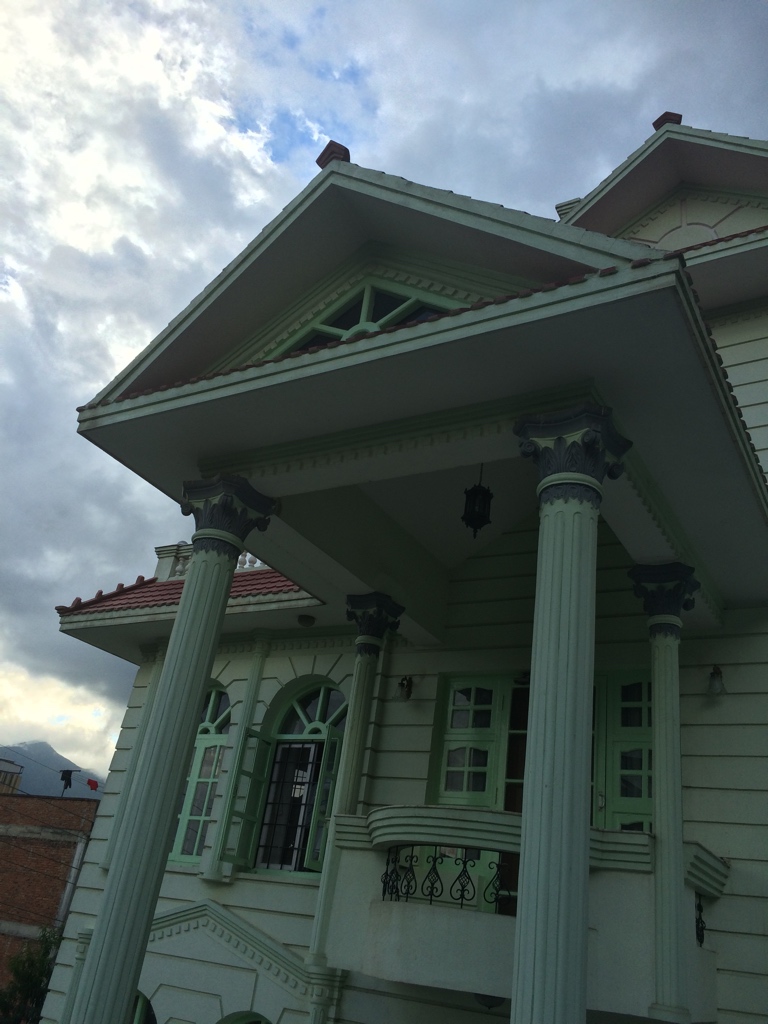


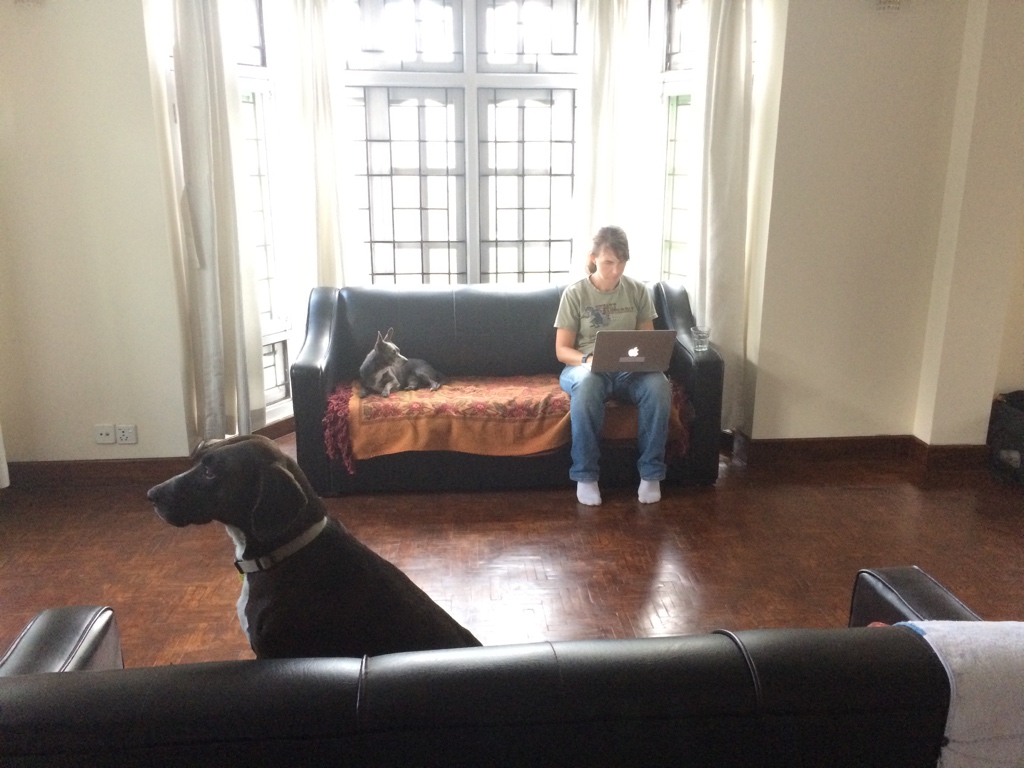

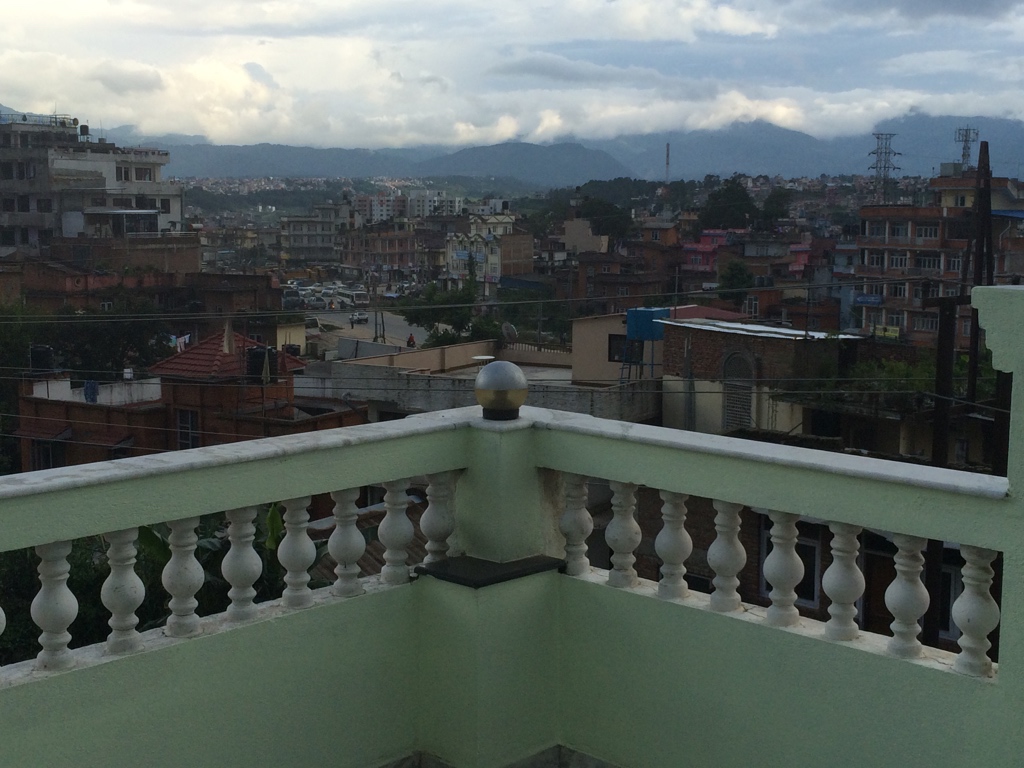


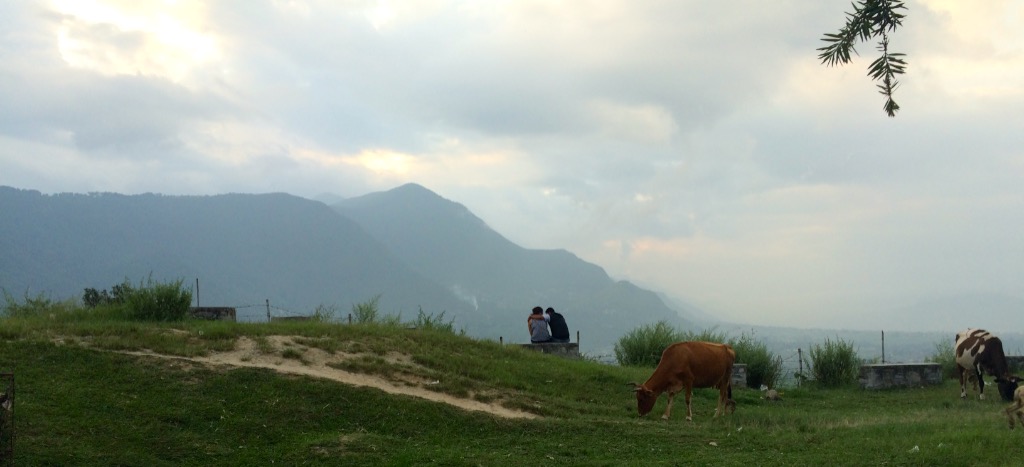
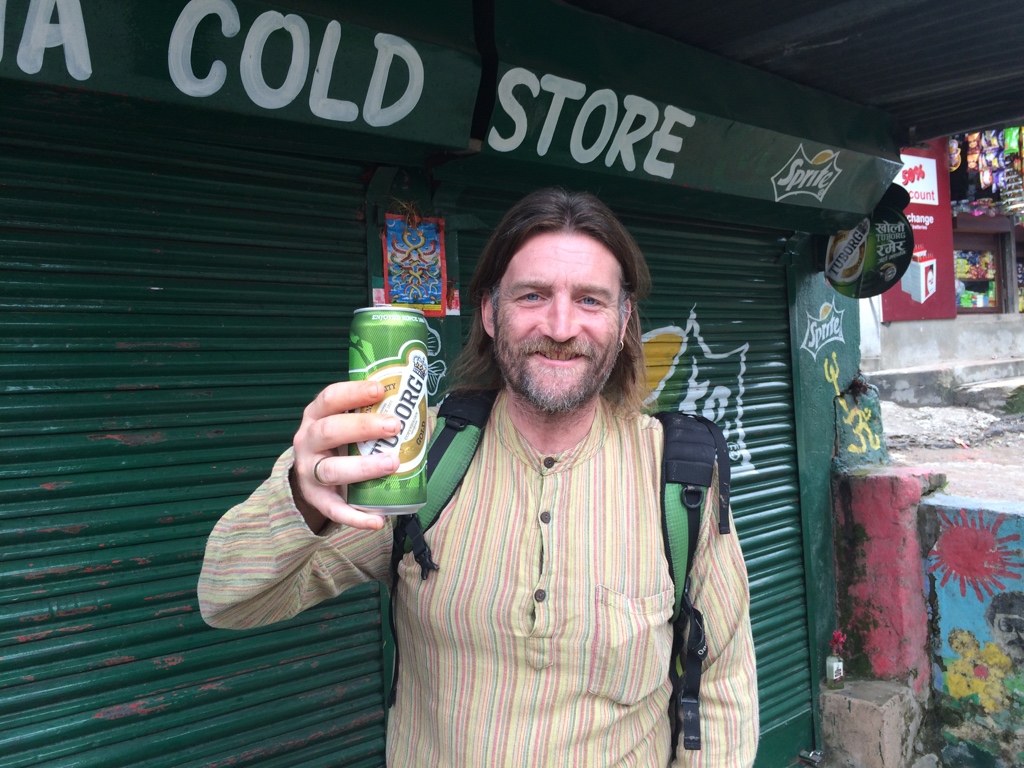



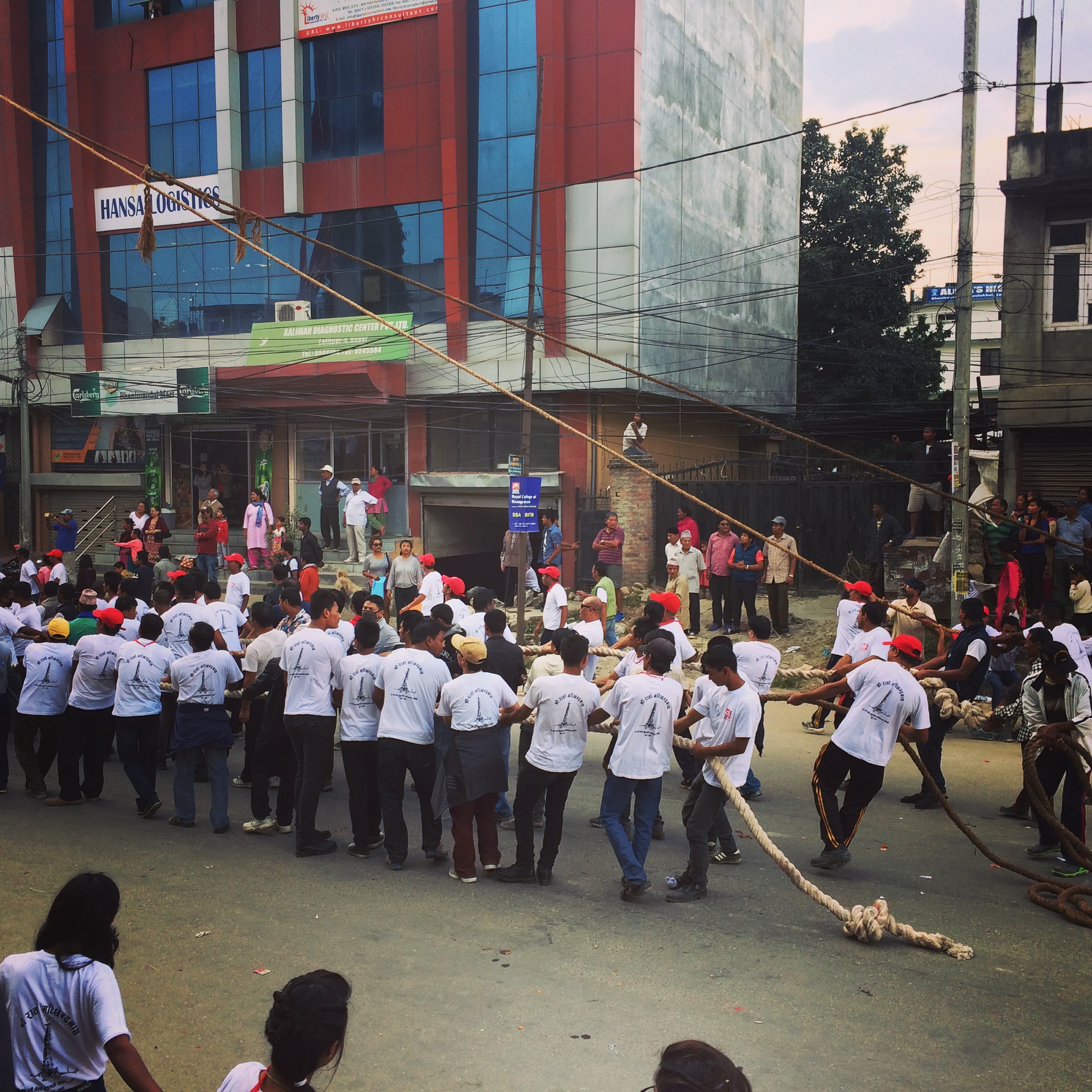

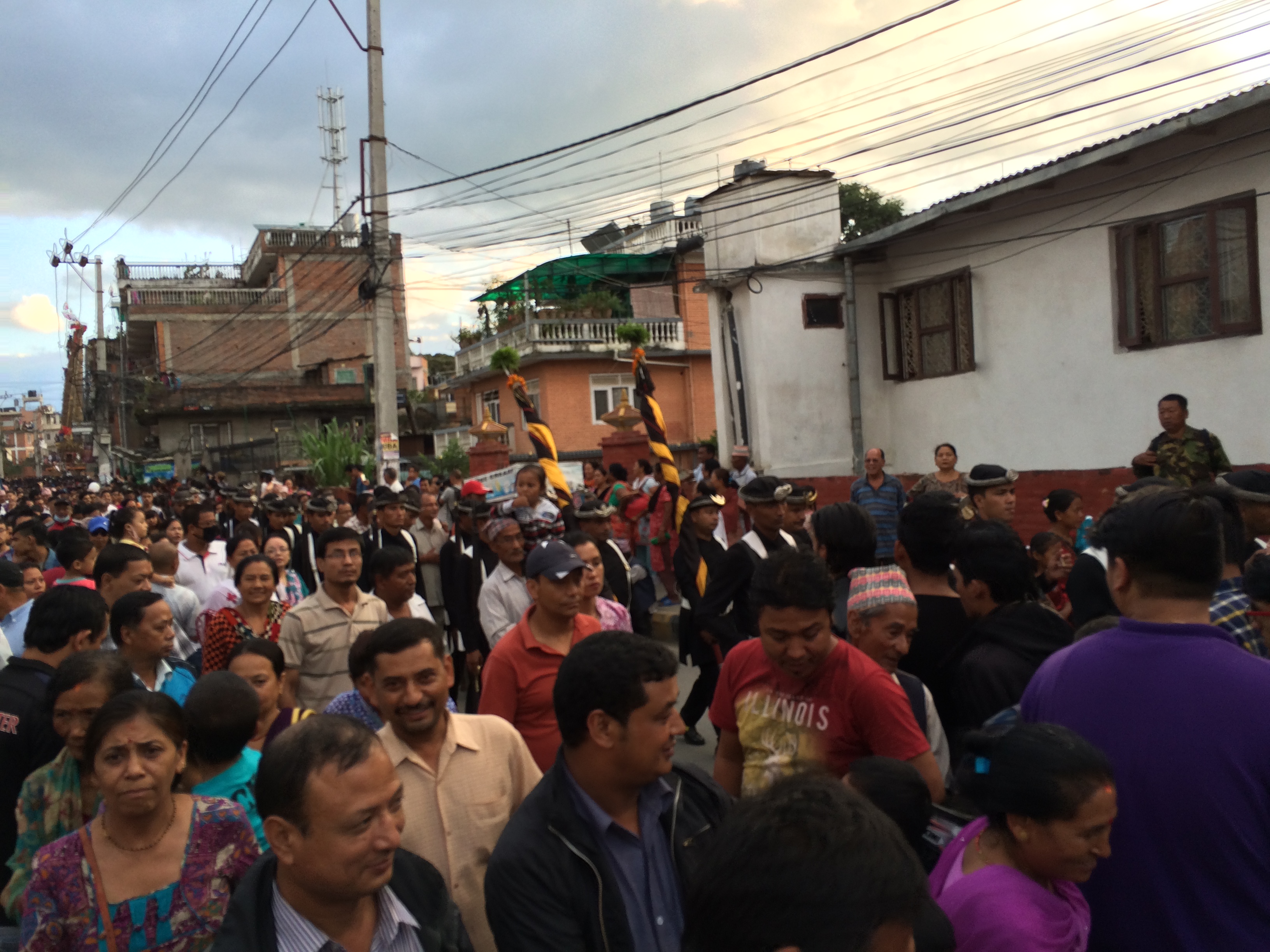


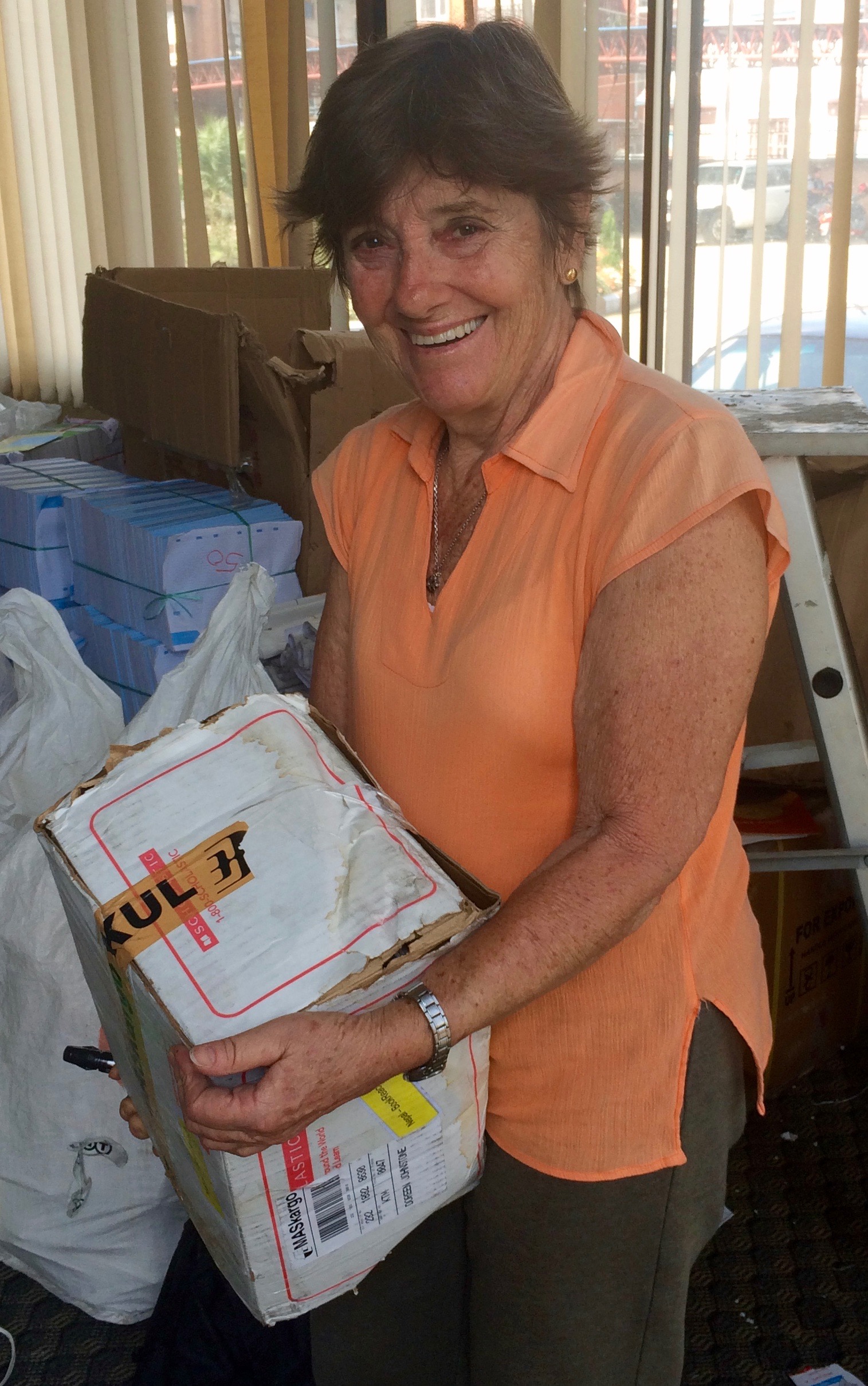
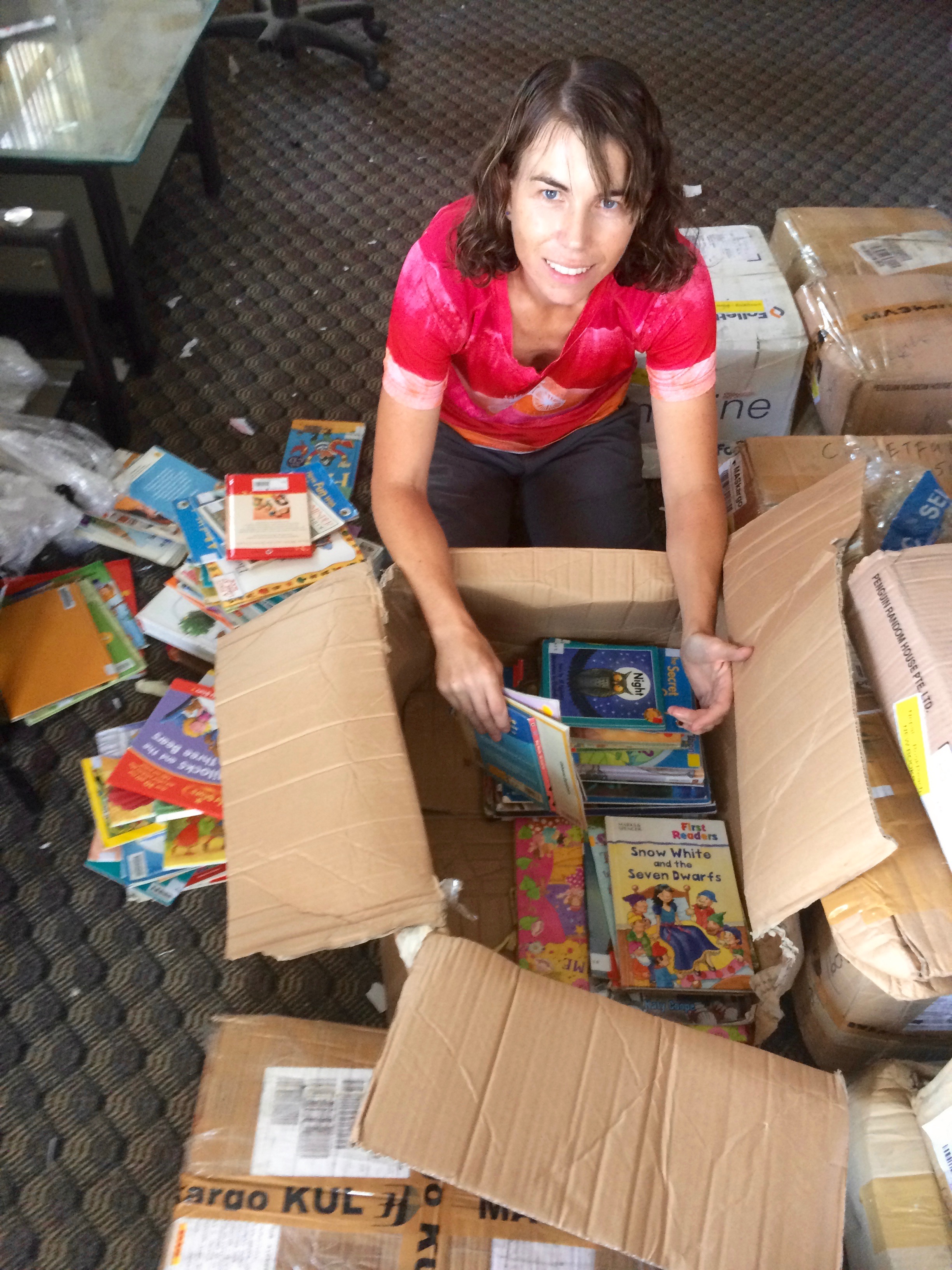
 Deep South Refugee