How to move two dogs to Kathmandu

TL;DR — Skip the saga, just tell me how

Make sure you’re moving to a country that’s okay with dogs.  Most are.  But research.

Got money?  Lots of it?  Pay someone to organize the rest for you.  Google will introduce you to dozens of companies eager to take your money and do the job.  It’ll cost you a few thousand.  If you prefer to spend less — like hundreds instead of thousands — then read on.

If at all possible, begin planning no less than two months from the fly date.  As you note the requirements from involved firms and agencies, construct a timeline.  The timeline will vary from country to country.  How recently must your dog have been vaccinated?  How close to the fly date should you schedule the wellness check?  If signatures and stamps are required, how long will it take to obtain them?

Don’t panic as you read through the next steps.  They seem like an insurmountable series of challenges, but it’s all part of a process.  Pet relocation can be accomplished with thoughtful, researched, organized planning and action.  Repeat to yourself:  It’s just a paper tiger.

1.  Find an airline that will fly your dog to the destination.  Call them, inform them of your plans, and book tickets with the understanding that you are only interested in flying if your pets are on board.  Be sure to ask about costs, weight allowances, required documentation, and how they will see to the pet’s needs during the flight (think: food, water, potty).

2.  Contact the Ministry of Health (or equivalent bureau) in new host country.  Ask for specifics on what their government will require for your pet’s entrance to the country.  Make sure you have a firm understanding of their quarantine policy, if any.  To minimize miscommunication, ask the same question three different ways.  Even still, be prepared for surprises at customs.  The import requirements of many countries can be found at this USDA page, but I cannot vouch for its accuracy.

3.  Contact your nearest USDA office.  Ask if you’re speaking with the federal or state office.  Ask what will be required for your pet to leave the airport, and what’s required when your pet returns to the US.  Take names and ample notes.  If you spoke with the federal office, contact the state, and ask the same questions.  If you spoke with the state, contact the federal, and… you get the idea.  The USDA attempts to explain all this on their website, but it reads like sanskrit, and isn’t totally accurate or up-to-date.

4.  Contact the CDC.  Their focus is pets returning to the US.  What they say will likely parallel what you heard from the USDA, but policies change all the time.

5.  Contact your vet.  Make sure (s)he is certified by the state and USDA.  The vet will need to complete the USDA’s APHIS 7001 form, as well as any health forms required by your state, and any international health certificates required by the host country.  State forms your vet should have on hand, but you will likely need to provide the 7001 and international forms.

6.  Assemble your pet passport.  This is not necessarily required by the host country, but it makes everything easier, and provides peace of mind.

7.  Make copies of everything.  You may be surprised what customs requires when you arrive, and trying to find a copy machine at an airport in a foreign country after a long flight is no fun.

8.  Start throwing money into a hole.  Expect to spend at least $400 on the shipping fee (less, if airline allows you to bring dog into cabin with you).  You will likely need to buy a travel-worthy kennel (different airlines have different size requirements).  You will need other doggie accessories, such as a sip bottle (like the kind in a hamster cage), cold weather jacket if the climate demands it, and other things that you think might be unavailable in the host country.  Amazon Prime is your friend; otherwise, PetCo and PetSmart offer lots of online shopping incentives and a generous return policy.  Expect some previously undisclosed “duties” and “handling charges” along the way, especially in the host country.

9.  Throw your hands in the air.  At some point, with the flight just hours away, you’ll realize there’s nothing further you can do to prepare.  There will be last minute fees, forms, and general unexpected hell.  Do what you can.  Take a deep breath, pour a stiff drink.  You and your buddy will get there eventually.

10.  Put the dog on the plane.  If you’re carrying your pal onboard, life is much easier for everyone involved.  The crew may or may not have procedures for potty time.  If the dog is flying below deck, then your pet’s life will suck during the entire flight, but you can minimize that suckage.  Provide plenty of blankets, food, and water.  Make sure the captain is aware he has live animals down there, so he keeps the climate controlled appropriately, especially on the tarmac.  Make sure the flight crew is aware of your situation.  An able flight crew will make sure your pet is fed and watered, but sadly, you can’t count on that with every airline, so yeah, a trans-oceanic passage could be pretty awful.  Sure you don’t want to leave Fido with your brother or something?

11.  Walk the dog out of the airport.  Customs will most definitely want to talk to you.  If you landed in a fairly developed country with transparent government policies, you will probably have all your documents together, and you’ll breeze right through.  If you landed in a somewhat backwards country, you might be stuck in customs for some time, while they sort out whether you’re allowed to enter the country with the dog or not.  They won’t care if Mr. So-and-So at the Embassy of Backwardistan assured you all papers were in order.  You’ll have to do as they say.  Hopefully your employer knows a good fixer.  Save all documentation.  Your pet may need it later to leave the country, or to re-enter the USA.

Our mad tale of how it all came together

My hope is to make the pet relocation process a little less painful for whomever reads this.  That said, the process is painful.  Painful in the butt.  But it’s doable.  And worthwhile for anyone who doesn’t have thousands of dollars to spend on a pet relocation service.

Let’s meet the dogs.  Our big girl is Boo.  She’s a lab-hound mix, 44 lbs of pure neurotic.  About a year ago, we adopted her from a local shelter, where she’d lived for eight long months.  Total sweetheart, lots of separation anxiety.  Not exactly a prime candidate for a 25+ hour trans-Atlantic, trans-Asiatic flight.   

IMG_6361Here is Floyd, whom a friend rescued from a truck stop over a year and a half ago.  He’s also sort of cuckoo, but has become a pretty lovable little chihuahua-miniature greyhound mix.  Very mellow, except when he’s barking at hallucinations.

2015-03-21 13.57.06

We recently accepted new positions in Kathmandu, Nepal, and this is the story of our mission to relocate there with our dogs.  My devoted readers will know that my wife and I are no strangers to relocation.  Many times now we’ve shoved our lives into three cubic meters and boarded a plane.  But never before have we attempted to board with any live animals, aside from ourselves.

Learn as much as possible about the new host country.  Is it pet friendly?  Are there places to walk the dog?  Do local municipal laws allow dogs?  Are there restrictions on size?  Will your accommodation provide your best friend sufficient living space?  What are the cultural attitudes towards dogs?  Will your housekeeper get jealous because the dog’s food costs more than her salary?  Will locals try to eat the dog?  By the way, totally not kidding about any of these questions.     

As it happens, Kathmandu is reportedly pet friendly.  Indeed, Hindus honor dogs — specifically on Kukur Tihar, a part of the annual Diwali “Festival of Lights.”
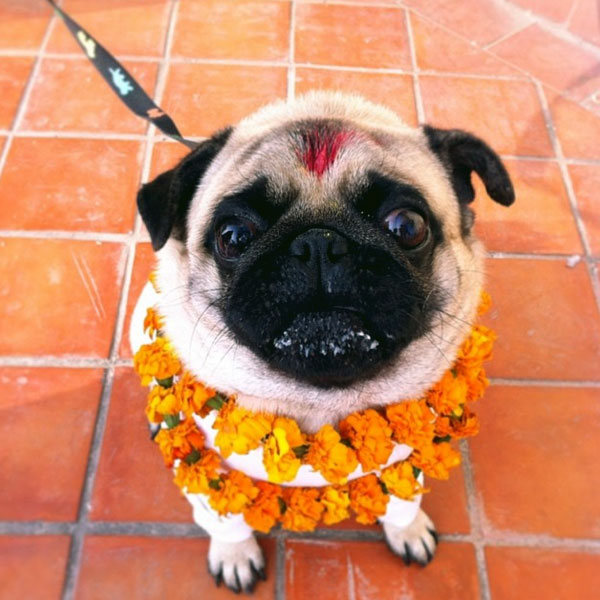
A bedazzled pug on Kukur Tihar. Source: http://www.dogster.com

We connected with a few people who live or lived with their pets in KTM, and they were able to confirm that we’d be fine bringing dogs over.  Our contacts all agreed that the hardest part is transporting the pets through the airport at home and then again in Nepal.  So our most immediate question: what does the red tape look like?

Woo boy.  Talk about a can of worms.  We’ve dealt with bureaucracy at every level, from US and NZ immigration procedures, to the Qatari ministry of health, to getting a gym membership in Sweden (much tougher than it sounds).  And I guess that got us toughened up for this research project — getting dogs out of the US, then into Nepal, then back again after the contract ends.

When booking flights in the past, I’d simply run a metasearch to find the cheapest flight with the least number of stops… maybe even a cool layover.  With pets, you must carefully consider your flight plan.  The plane cannot fly through certain countries if animals are on board.  Certain countries may disallow animals for environmental reasons or reasons of health and safety.  For example, New Zealand won’t let anyone enter the country with plant or animal products of any kind — fruit, dried shrimp, even wood-handled tools are forbidden.  Dogs are cool, so long as you’re happy to let them sit in quarantine for a couple weeks.  Because you know, that stuff could cause a chain reaction that wipes out the kiwi birds or something.

Countries like Abu Dhabi and Qatar won’t let animals fly through because it’s so damn hot.  If you left Poochie on the tarmac for longer than 5 minutes in Doha, she’d be shawarma.  For us, that meant no Etihad, no Qatar Air, and no Emirates — all airlines with otherwise convenient flight paths from our nearest airport to the final destination.

We contacted a number of local travel agents, but none of them wanted anything to do with a pet relocation.  Too many hassles and too much liability, given that it’s a family member at stake.  Thankfully, the AAA was happy to help, even though we aren’t members.  They pointed us in the direction of probably the only major carrier that could do the job, Turkish Airlines.

Even if your AAA office recommends an airline for you, be sure to verify everything with that carrier.  TA’s stateside customer service isn’t exactly spectacular, but after a half hour or so of broken English conversation, I was able to confirm they will transport dogs.  But there would be surprises in store for us later.

While TA was happy to take our money in exchange for the transport of dogs, we found domestic carriers to be less accommodating.  Few allow pets as checked cargo.  Those that do, want lots of money, in addition to what the international carrier already demands.  They have a handful of other sticky rules, and when we did the math, it made more sense to rent an SUV and drive the whole dang gang up to the international hub.

Doing this cost a little more, and obviously would take more time, but think about which would be more enjoyable:  a leisurely, scenic road trip with stops for short hikes and maybe a camping trip, accompanied by two dogs who love riding in the car OR… tacking on an extra four hours fly time to what’s already going to be a 25+ hour flight, right after squeezing dogs, luggage, two humans, and a big ass dog kennel into and out of a Prius?  I feel we made the most prudent decision.

Different countries require different things to import pets.  Australia, as Johnny Depp famously learned, is among a handful of countries that quarantine newly arrived animals.  Many countries, fortunately, require only a stack of documents thick enough to choke a horse.  In the case of Nepal, I called their embassy in New York.  The man who answered sounded like I had woken him from a nap.

“Yes what?”

“Uhh, is this the Nepalese embassy?”

“Yes yes what you need?”

I explained that we wished to bring our pets into Nepal, and needed to know the requirements.

“What you asking me for?  That something the government handle.”

“Which is why I’m contacting you.  At the embassy.  Of Nepal.”

We got nowhere fast.  I guess I should’ve pushed harder.  Maybe made some more calls, asked for supervisors or something.  Or tried to dig up a contact at their health ministry.  But having now gone through the process, I’ll say it probably wouldn’t have made a lick of difference.  More on that later.

Equally frustrating, our own blessed government employees.  Try to find relevant information online, you’ll get stuck in a Möbius loop of digital insanity, or dead-end at a nonsensical paperwork dumping ground like this one.  Calling the central USDA number proved just as useless, so I tried the state office.  It so happens, one of their offices is near our house, so I dropped in.  Thus began my trip down the rabbit hole of how the USDA works.

The USDA has a million offices in a million buildings, each office designated to one compartmentalized detail.  The office I visited handles import-export, yes, but only of plants.  They gave me a number for an office two hours away that handles animals.  Called that number, talked to a real helpful fellow.  Real knowledgeable.  At least, that’s what I thought until later, when I realized he only worked with interstate import-export of animals, not international.  I’ll come back to this point later.

What you need to know for now is this:  most countries will require at minimum an APHIS 7001 form.  You can thank me later for the link, because the USDA doesn’t make it easy to find on their website.  The 7001 is a federal-level document (not to be confused with the state-level USDA form your vet may mistakingly suggest) that must be filled out by your USDA-certified veterinarian after (s)he performs a wellness check of the animal, then sent to a federal (not state) USDA federal office to be stamped for a $55 fee.  I mention the fee because if you’re transporting more than one pet, you can list them all on one form, thus paying only one fee.  The wellness check often needs to be within 10 days of arrival — check with your host country on this.  The stamping itself is mercifully quick, but because it’s a time sensitive document, you may consider driving down to do it in person, which requires an appointment.  If this is not an easy option, overnight a self-addressed express envelope to the office and hope for the best.

It’s important to also be mindful of what the US requires to bring a pet back home.  At the time of this writing, the animal needs a recent statement of good health from a vet in the host country, as well as up-to-date shots records.  I’d recommend also keeping on hand your pet’s entire medical history, in case it’s required later.  You’ll want to contact the CDC a few months before you plan to fly home; the federal-level USDA guy tells me incoming pets are the CDC’s jurisdiction, not his.  However, you will need to contact the state-level USDA office of whichever state is your final destination.  They will likely have something like a “companion animal certificate” that needs filling out.

I cannot say the pet passport is money well spent.  It’s sort of like when you turned in your high school essays in a plastic sleeve.  It didn’t improve the quality of writing, but it looked prettier.  The pet passport is something we found on a for-profit website.  The company claims to have passports “customized” for every country.  It will cost you $15, and for a little extra, you can have a handsome leather sleeve.  See?  My high school analogy isn’t far off.

How about I save you $15 right now?  Here’s what you need on that pet passport:

  • Photo of pet
  • Name of pet
  • Breed, sex, age, color
  • Microchip number
  • Owner(s) contact details (phone and email)
  • Alternative contact details (such as friend or family member)

It looks something like this:

IMG_7322

Notice we put in (sigh) a plastic sleeve, so it’s grouped with all the other required documents (APHIS 7001, rabies certificate, vaccinations, medical history).

Boom.  Now go buy yourself something nice with that $15 you just saved.

With everything neatly assembled in one place, you should make copies of every single page.  No telling what documents that customs guy will need to keep.

As for how to transport the dogs, every airline has different requirements, but as a general rule, if you lapdog is allowed to fly in cabin, Poopsie will need a carrier that meets the carry-on requirements (i.e. fits under the seat).  If you’re checking your larger dog onto the plane, then Buster will need a kennel that allows him to stand up and turn around.

Here’s how our dog transports were organized in the end:

IMG_7343

  • We slid Boo’s pet passport into an envelope and attached it to the top of her kennel with clear packing tape.  This way, cargo and air crew would have easy access to her details if needed.  We also equipped her ride with a giant plastic hamster-style bottle and plenty of warm blankets.  For an added touch of class, I slapped a bunch of brewery stickers all over the kennel.  That step is optional.
  • Floyd’s passport went into an envelope, and that went into my carry-on man-purse, along with the duplicates we’d made of 7001’s and vax records.  His carrier was equipped with a mess of blankets too.
IMG_7272

Would you could you on a train? Would you could you on a plane?

IMG_7279

D’awwwww!

Final days.  Here’s where things got tense, despite our best laid plans.  Both dogs had their vaccinations updated 30 days before the flight, as most any country will require, no problems there.  As required for Nepal, we took them to the vet for their “fitness to fly” check within a week or so of the flight.  That’s when things went south real fast.

The vet filled out the APHIS 7001, as well as the interstate travel form.  I was in the post office, ready to overnight the documents to the USDA for stamping, when I realized I didn’t have their address handy.  Called the number, but got a different USDA guy.  He was like, “Why are you using the 7001?  Do you know if the Nepal government even accepts that?  Most governments have their own form.  Didn’t your vet know that?  And why are you sending the interstate travel form?  That’s only if you’re moving your pet to another state.  I’m a federal guy, not a state guy.  I don’t even stamp that.”

So basically, the “knowledgeable” USDA fellow we’d talked to a month previous had given us completely erroneous information.  We’re days from our flight.  If the government of Nepal requires additional documentation, we have no time to obtain it, much less get it stamped and sealed by the US authorities.

For about ten minutes, I lost my damn mind.  Right in the middle of the post office.  You know you’re a mess when postal workers are concerned about your mental health.  Then I realized, “Hey.  Nothing we can do.  We’re just gonna put these dogs on a damn plane and hope for the best.”

I mailed the documents to the USDA, came home, made and sandwich, and drank a full ass glass of wine.  A couple days later, we picked up the SUV, packed in four suitcases, one kennel, one carrier, and two dogs, and hit the road for the Grayson Highlands in the great state of Virginia, followed by a couple days with family in Washington, DC.  That little adventure deserves its own blog, but it suffices to say the dogs got their ya-ya’s out before the big flight date.

Fly day

Anyone who’s flown with even the most meager of luggage knows the heightened level of crazy that’s experienced at any airport drop-off point.  You’ve got two lanes of cars all pushing in to the same tiny space directly at the airline’s front door.  You have to jump out, madly flinging suitcases and god knows what else onto the curb while an angry motorcycle cop bleats his siren because you are taking too long.  The PA is blasting off warnings about distressed security levels and how your really shouldn’t be parking your car for even a second and how if you take your eyes off your bag just once then a terrorist will plant a bomb in it.  Horns are honking.  Delayed jets scream away in the background.

Now, add two dogs to the situation.  Also, pretend you drove a rental care and you have to return it which means you need to abandon your wife at the curb with two dogs while you take care of that, then hop the shuttle back, and hope that you can find her at departures.

This is why we have curbside porters.  Bring cash.  The rule of thumb is a $1 tip per bag, but given our extraordinary luggage, I was happy to sweeten the pot a bit.  I didn’t feel great about leaving Fiona with the two dogs, but the porters were great in getting her out of the heat and into the departures lobby.

Pulling up to the rental car returns, I felt smug.  We’d taken precautions to ensure no dog hair littered the vehicle, because no rental agency in their right mind would knowingly permit its customers to transport animals.  The check-in guy performed the customary checks for dents and scratches, then stamped the car as A-OK.  Only when he started to drive away did I notice the stash of dry dog food in the passenger side door handle, which Fiona had made into Floyd’s ad-hoc feeding tray.  Not sure if I need to be worried about that or not.  Ah well.

Turkish Air checked us in as promptly as could be expected.  Both dogs were weighed on the luggage scale whilst in their carriers.  Both dogs were within the weight allowances and TA charged us about $600, as agreed at the time of booking.  The TA clerk asked if we wished to leave Boo now or formally check her in later.  We felt sooner was better than later (Boo seemed to detect this betrayal almost immediately), so a TA porter wheeled Boo to a special TSA counter.  This is the last moment when owners are officially allowed to touch their dogs.  The inspector ran his anti-terror magic wand across the dog, then throughout her kennel and blankets.  He bound up the kennel door with zip ties and slapped a TSA inspection tag on the side.  Sadly, we had to leave Boo behind the TA ticket desk while we went to do our own security check-in.

Floyd had a decidedly easier time.  A quick wave of the wand, and he pranced right through security, to the adoration of every TSA cop in the place.  He sat underneath our table at the mediocre airport restaurant, where Fiona fed him bits of sausage.  Meanwhile, Boo undoubtedly bemoaned her abandonment to a gang of Turkish dog traders.

The flight was long.  The intended itinerary was DC to Istanbul, Istanbul to Kathmandu.  Before every takeoff and during each stop, we asked the flight crew to check on Boo.  They always shot us a toothy grin and thumbs up, but failed to provide any substantial information.  We came to learn the crew was not trained on any “procedure” for feeding, watering, or potty breaks as promised by the agent at the time of booking.  This was bad for Floyd, who managed to hold it for the most part, but surely was worse for Boo, who wasn’t let out of her kennel during the entire flight.

What made matters worse was the diversion to Delhi, due to poor weather in Kathmandu.  India is one of the “no pets” countries, so we had no idea how that would play out and neither did the crew.  Fantastic.  We sat on the tarmac for a couple hours, and we were assured the air conditioning in cargo was running that whole time, but it sure as hell wasn’t in the cabin, and by this time, we had no reason to believe anything Turkish Air had to say.  We were pissed off, but the situation was entirely out of our hands at that point, so all we could do was wait it out, and hope they didn’t kill our dog.

When we finally landed, it was like the curbside at Dulles but in reverse.  Long line for visas, mercifully short line for passport checks.  No wait at all for baggage claim.  A bit of a trial finding Boo… it’s not like anything at KTM airport is clearly labeled.  Finally, we had all bags and all dogs in tow.  Boo was practically turning backflips when she saw us.  All we had to do was walk out that door, where a driver with a sign would await us.  It goes without saying, we were thoroughly jet lagged, exhausted, and short tempered by this time, so I sure wasn’t in the mood for some customs official to tell me I needed to stand aside with our cart full of crap and two dogs.

Naturally, that is precisely what happened next.  I pulled the puppy passports, sure that this would satiate his bureaucratic hunger, but no.  He was merely a bottom feeding bureaucrat.  I’d need to talk to their “quarantine” official.  I sure didn’t like the sound of that word.  Where, pray tell, would I find this official?  The man pointed me to an unoccupied desk with the word ANIMAL QUARTINE scrawled across it.  Taped to the desk was a piece of paper with two phone numbers.  He was pretty sure the guy could be reached at one of those two numbers.  I asked if he had a phone I could use.  Of course not.  I explained, having just arrived, my phone did not have a local SIM card.  He suggested I go get one.

IMG_7282

During this conversation, Fiona was busy rehydrating Boo.  The ground crew had managed to break her water bottle, and she’d apparently not had a drop to drink for the entire journey.

With Fiona once again guarding our completely disoriented, dehydrated dogs, I set out on a quest.  It involved finding three broken ATM’s, two crooked money changers, and one actually quite pleasant SIM card salesman.  I must have walked back and forth through customs a hundred times, and each time a policeman told me I couldn’t go through, until I explained in exasperated, rapid fire English that my wife was with my dogs in customs and I had to call two phone numbers to talk to the quarantine man who works at a quarantine desk with no man at it.  They let me through every time, which is very different from similar situations with the TSA.

Called the two numbers, they didn’t work.  The bottom feeder scratched his mustache, thinking hard, staring at the still-vacant QUARTINE desk.  He noticed a few more numbers, scribbled in pencil next to the white piece of paper.  He said to call those numbers next.  For all I know, they were numbers for hotels or massages or who knows what.  Just then, my phone rang!  It was the QUARTINE man!  I guess he’d seen my phone ID pop up.  He said he’d be there to meet me in fifteen minutes.  The cacophony of barks and meows in the background suggested that his interpretation of 15 minutes was different from the one on my watch.

Forty minutes later, the QUARTINE man arrived.  He wanted copies of my 7001 and rabies record, which I had on hand.  He inexplicably wanted other, random pages from the passport, for which I (take note) did not have copies.  New quest:  find a copy machine.  More heated exchanges with customs officials.  Finally, QUARTINE man is happy and stamps some official looking piece of carbon paper.  I pay another bureaucrat about $50 in “taxes” and at long last, we have arrived to the balmy free air of Kathmandu!

Finale
IMG_7314

Rodents!!

Incredibly enough, our driver was still waiting for us, seven hours after our projected arrival time.  We arrived at the hotel, and as soon as I took the dogs out of the van, they proceeded to execute the Longest Pee Ever.  How they held it for so long, I’ll never know.

We’ve been in Nepal for several days now.  The dogs aren’t exactly crazy about life in a hotel room, but that will soon change, and more than anything, they’re happy not to be on a plane any longer.  We go on walks every day, just as we did back home, but we need to be vigilant about the stray dogs in the street and strange food littering the sidewalk.  As if they weren’t spoiled enough already, they drink only bottled water, but that’s because the tap water will poison them.  There are plenty of rodents for Boo to chase, and Floyd continues to attract lovestruck glances from all passers-by.  I think we’ll be fine.

Wherever you plan on taking your dogs, I hope our story helps.  Despite the rough patches, we made it without paying anyone a substantial fortune and without losing our buddies to the great dog park in the sky.  I’d say it was worth it to have our dogs with us on our newest adventure.

The Slums of Boiling Springs

“Well this place is just garbage.

I like our realtor.  He says what’s on his mind.

“Look at that.  Water damage.  Look:  dry rot.  Up there, old ceiling fan.  Disgusting.  Who uses gold chrome anymore?  Always check underneath the sinks because — aha!  See?  Mildew.  Over here.  Vinyl siding peeling off.  Must’ve had their barbecue set up there.  Dog shit over there.  And there.  And there.  Looks like the dog liked to eat trees.  Big burn pile over there.  Maybe burned garbage.  Who knows.  Maybe burned the dog.”

It’s been almost seven full days of house hunting.  We have three realtors who have shown us every house listed from south Spartanburg to the finger lakes of the Carolina border to the farm fields-turned-subdivisions of Lyman, Greer, and Taylors.  If drivers earned air miles, then I-85 would send me to Tahiti next week, first class.

And we have seen some crap.  Some real crap.

We saw a house made entirely of doors.  You walk into the front door and there are two more doors to choose from.  Each of those doors in turn leads to yet more doors.  Are there any rooms in this house, or just corridors?  I’m still not sure.  It was like a sideshow attraction at the county fair.  Kept expecting an evil clown to jump at me.

We visited a house with an unfettered view of a lake.  For the price, we wondered what was wrong with it.  Here’s the catch:  wall-sized windows looks out to the lake, but they don’t open.  The resident stuck in the climate controlled gulag (with a view) of his own making.

We’d been looking forward to the Boiling Springs properties.  Boiling Springs, for the uninitiated, is the bedroom community of industrial middle managers from BMW, moderately successful business owners, and a surprising number of teachers and administrators.  Very ticky-tack pre-fab housing, but hey, there’s a community pool in every neighborhood!

What we saw, however, was Little Qatar.  A side of Boiling Springs that most of her BS residents don’t realize exists!  Housing that looks as if it were constructed overnight by Bangladeshi slave laborers.  Entire chunks of building left unfinished, yet the houses are somehow occupied.  Teeny tiny bedrooms in one part, enormous, inexplicable, impractical spaces in another part of the same house.  Appliances installed no further back than 2005, but looking like the Circuit City catalogue.  If they named suburban houses like they do beach houses, the names above the doors would’ve read “Good enough for gov’mint work” and “Probably not a fire trap.”  All of it crumbling away, no doubt one day soon doomed to sink into the scenic brown pond across the suburban street where everyone drives 60 mph in a residential zone.  So again, Little Qatar.

The good news is, we found one place that’s not only not awful, it’s actually pretty good.  Don’t want to say too much just yet because I’m superstitious about things, but very soon, we may join the ranks of Americans I’ve avoided joining for so long.  The white picket fenced, green lawned, rocking chair porched mortgage payers of the civilized world.


Starting my GT class

I’m getting certified to teach gifted-talented students.  The beauty of being in the US is the professional development is paid for by the school.  I don’t have to beg, borrow, or negotiate.  The PD policy is clear and straightforward:  ask and ye shall receive.

I finished my summer theory course already, and it was informative.  Now I’m starting the curric and instruction section.  For our first assignment we had to demonstrate basic technical know-how, including the art of uploading a document to the web.  The professor gave us the prompt you’ll see below, and probably expected a couple sentences from each student.  I thought the prompt was very silly so I wrote a silly answer.  I posted it here because I laughed a lot while writing it and think it sums up my life pretty well right now.

Describe how you will ensure that you set aside time and a place to complete your assignments for this course. What will you do to stay on track?

I have a home office that I share with my wife. My desk looks very expensive, but in reality it is two end tables and a door that I found on a curb in Greenville one afternoon and managed to cram into a Prius. I’m crafty like that.

Also in this office is a solid 10 mbps wireless internet connection, a power supply that so far has proven reliable, and enough banana chips, almonds, and raisins to outlast this course, or the looming zombie apocalypse, whichever comes first.

Tools at my disposal include a stapler, staples, paper clips, highlighter pens, regular pens, red pens for when I’m angry or want to get a point across, and an aged but trusty MacBook Pro. The MacBook Pro I purchased in Hong Kong, the spring of 2010. I’m pretty sure I got the best possible price for it, and haggled a carrying case and USB key as part of the deal. The USB drive doesn’t work anymore, but in this modern age, those things are becoming obsolete anyway.

Which brings me to the software. The single greatest invention for an ADD-addled mind such as mine has been cloud technology. It enables me to access and edit documents from any terminal, anywhere in the world. Same goes for the cloud calendar. When a deadline approaches, reminders alert me a week ahead, a day ahead, and fifteen minutes before.   This happens across four different devices, so there’s really no excuse for me any longer to miss a paper, forget my 6th grade class while I’m making coffee in the lounge, or fail to bring home flowers for my wife’s birthday. She got really ticked off that time I forgot her birthday. Who does that?

My life is a world of distraction. We have two dogs at home, and I believe one of them to be a complete and hopeless idiot. She barks at postmen, the maintenance guy, and often, nothing at all. Nothing. I also like to write and sometimes get caught up in flame wars on social media websites. I read from ten or so online newspapers as well as thick books on Russian history, and I read slowly. Sometimes I wonder how I finished high school, much less graduate school. Fortunately, there are numerous factors that will keep me on track.

I’d like to one day become a curriculum coordinator, and I see a GT certification as being part of that roadmap. I work hard at things if there’s a good reason for me to do so. My wife is an enthusiastic fan of my continuing education, because we prefer to earn more money rather than less money, so she’ll nag me if need be. I also work for a principal who will likely fire me if I blow off this class, since he’s paying the tuition. He’s a fair man.

On a final note, it’s safe to say that I will stay on track with this course because I am a grown up and that’s just what you’re supposed to do. So long as the professor clearly expresses what she would like the class to do, then I will do those things and make a concerted effort to engage with the material.

Quasi-single-hood at 35

My beloved Fiona serves a sentence of five months hard labor in Doha, Qatar. Meanwhile, I sit and wait for the time to pass. What is a man, newly quasi-single, to do?

It’s not like “Hall Pass,” mind you. No hanky-panky. I’m a man of integrity and I love my wife very much. Besides, we’ve not even been married long enough to talk about a seven-year itch.

My single friends, envision a life where you continue to do as you do as a single person, but take the pursuit of sex off the table. My married friends, think back to your single days, and how you’d spend your newfound abundance of free time.

My divorced friends, you don’t have to imagine. You know where my head is at right now. Empty, empty space. Lots of it.

The first six weeks were hard. From the first morning of not waking up with her in bed next to me. From the first afternoon of having no one to relate the events of my day.

But I’d be lying if I didn’t say those early weeks were also kind of awesome. Evenings a snifter of rare bourbon, all mine to enjoy, without fear that the bottle will be sullied away into a glass of Coke and ice. Warm up the turntable, drop some vinyl, plug in the headphones, close eyes, dream. Write down the movies that play across the insides of my eyelids.

Before long, the new ideas dried up. I began rereading old material, revising along the way. It made me nostalgic for my partner as I relived the doldrums of life before marriage.

I got sad, tired, and bored.

I rearranged furniture. I hung wall art. I tried new things in the kitchen.

I began to go out, exploring my new neighborhood. Some bars were full of college kids, wide-eyed and stupid. Others occupied by a smattering of thick hillbillies, bitter divorcees, and other untouchables. Not sure which was more depressing.

One night very recently I watched “Her.” Spike Jonze’s concept of a man who falls in love with a disembodied woman resonated with me. Every morning and night I talk to Fiona and every morning and night I feel more desperate for her presence.

Which brings me to today. It’s official. I’m in a state of distress. The novelty of life minus wife has faded away. The horrible magnitude of this has finally sunken in.

I’m thankful for the friends and family I have in the area who make it not easier but at least deal-able.

As for now, I count the days.  Happy Valentine’s Day, everyone.

Foreward: mansuscript for overseas teaching guide

It was the early 2000’s and like most Americans in their mid-20’s, I was marginally employed and drifting. A move clear across the country had been my first extended venture outside of my zip code, and the West Coast was like Mars. Free minded individuals, unburdened by outdated mores and blasé life ruts. Artists running naked in the streets. Free love anarchist communes and bicycle armies. Unfortunately, poetry wasn’t paying the bills. Foodservice and call centers offered little as far as stimulating work environments are concerned. It was time for a change.

“You should become a teacher.” This was about the seventieth suggestion offered by my father on one of our melancholic Sunday phone calls. I had always entertained the idea, sure that I could trump the hacks who had collected salaries in the sad, sorry school districts, teaching me to hate novels and world history. But then, I had also always wanted to be an international spy, a hard-nosed journalist, a syndicated cartoonist, and a ring-tailed lemur. Wanting something don’t necessarily make it so.

Still, the idea grew on me. Especially when I heard about this whole overseas teaching scheme. The school flies you out, pays your rent, and… did we mention the whole overseas teaching part of this deal?

Life transitioned quickly from Dollar Beer Tuesdays at the local punk dive to Thirsty Thursdays in the university district to falling asleep at 8 o’clock on a Friday night with a glass of wine in my hand, grading spelling tests at my kitchen table. All those naked bicycling anarchist free love artist friends faded away to Never Never Land as teaching became my new life. The plan was to put in three or four years in the American Public system and then nail down a dream job in someplace exotic.

Someplace they speak Spanish. Someplace full of beautiful women who have never met — and therefore never been disappointed by — an American. Someplace without “hipster irony” and other phrases people invent to sound clever. Someplace that delivers white rum drinks on a chrome platter to your beach chair while a teaching assistant grades your spelling tests.

It bears repeating. Wanting something don’t necessarily make it so.

Halfway through my second year, one of my administrators quietly approached me.

“So… you’ve been talking about going overseas sometime down the road, yeah?” he began. “Here’s the thing. We’re looking at the budget for next year, and while I can’t officially tell you what this means for you and the other new teachers, I can unofficially tell you… start looking for that overseas job now.”

Reading into his subtle message, I signed myself up for what would become the most insane yet rewarding decision of my life. With some hesitations, of course. Just two years in the field, I was unsure of my abilities to start teaching in the big leagues. As it turns out, that hunch was absolutely accurate.

What I wish to present in this book is an accurate as possible portrayal of overseas teaching. If you have read this far, you are probably considering it yourself. You may have even attended a workshop about it, where rosy cheeked 50-somethings sing a happy song about the amazing, easy life overseas teachers enjoy. If it is anything like the workshop I attended, they left out the bad parts and replaced them with a slideshow of badly dressed people in front of international landmarks. Or shouldering parrots in the Amazon. Or riding rickshaws in Bangkok. I am here to tell you that is all pretend.

The life of an overseas teacher is gritty and cruel. It is rife with people who spit in the street and generally have detestable hygiene. It is an uncomfortable world of drunkards and hooligans, confidence men and opportunists. Mouth-breathing simpletons and arrogant racists. And that’s just your fellow expats.

Though you will be thrust well out of your comfort zone, there will also be moments of pure bliss. You will work with some of the finest teachers in the profession, and you will work hard and you will work with great enthusiasm. You will behold sights that in your past life existed only in the pages of National Geographic. Yes, that beach exists, and though there may not be an assistant to score your spelling tests there will be a gilded serving platter. Cuban rum even.

Enough pitching. You want to do this thing? Then here is everything you ever needed to know about overseas education, but didn’t think to ask.

Enter the Fixer

Camel-killing temperatures bake the asphalt as my shirt cakes in salty sweat, soaking in the kind of humidity that you don’t think exists in desert climates but let me tell you, it does.  Surrounding me, a mob of migrant workers, queued (in the loosest possible interpretation of that word) to enter a tent marked WORKER ENTRANCE.  An ant-line of laborers files out of the exit a few meters away, bandage on each arm, official-looking government document in each hand.

The men around me look puzzled, talking at me simultaneously in Nepalese.  Gutra-clad Qatari men break into the crowd, shouting orders in Arabic.  The men immediately push into the tent, leaving me in a now-vacant parking lot.  A bus pulls up and what appear to be hundreds more migrants disembark, filling the musky vacuum in which I stand.  I’m confused; this is confusing.

That’s when I see him.  He approaches like a phantasm, his flowing dishdasha swishing in the air despite the lack of breeze.  He seems not to walk but rather to drift, drift like Saudi teenagers in Mercedes Benzes.

He gently grasps my elbow, removes his too-damn-cool-for-a-name-brand sunglasses, and says with the gentle authority of the universe itself, “Mister Sam.  Come with me now.”

His name is Nidhal and he is my fixer.  He is going to fix all of this for me.

I have no business by the WORKERS ENTRANCE, he tells me.  I must instead use the EMPLOYEES ENTRANCE, which apparently is for foreign professionals such as myself.  He seems to crack a smile, perhaps amused at my naivety, but I cannot be sure.

We walk into a building that, while not resembling a tent in any way, is at least halfway as topsy-turvy inside.  Lines, arrows, and ropes form a labyrinth, reminiscent of my bygone hours spent in DMV’s.  Nidhal gestures for me to follow him right past the crowds of puzzled businessmen, engineers, and other foreigners who were told this process would only take an hour.

He pauses outside a door marked only by a number, deep in thought, conspiratorial, like George Clooney right before he does anything.  Now that I think about it, with that close trimmed beard and square jaw, Nidhal looks an awful lot like George Clooney.  Except taller.

Nidhal quietly pushes the door open and motions me inside.  A clearly overwhelmed doctor sits at a desk, piles of files scattered about him.  Speaking in a voice like the wind whirling the desert across the dunes, Nidhal says a few words in Arabic that, like so many words in Arabic, speak volumes more than English.

The doctor responds immediately by taking out an ink pad and stamping insignias across a document with my name on it.  Nidhal thanks him.  We leave.

Nidhal leads me to another door.  Inside, a Filipino orderly takes my document and passport, studying both carefully.

“A TB shot?  Really man?  You’re a white guy from America.  You don’t have TB.”

I reply that he is of course correct, that this whole process is an unfortunate consequence of having irregular chest x-rays due to my Beijing-airborne-toxin-tattooed lung.  He rolls his eyes sympathetically and takes out a needle.

“So,” he asks, “what’s the latest on the airstrikes in Syria?”  I tell him that sadly my citizenship does not make me privy to insider information.  He jabs the needle into my arm.  “Come back in two days.  If it looks infected, I guess you have TB after all.”

Nidhal is not impressed.  He would prefer to see everything wrapped up sooner.  If he could coerce my cellular biology to play by his rules, I know he would.  But a fixer can only fix so much in one day.

This is my first week in Qatar, and my first week back in the Middle East after leaving so frantically in 2008.  I must say, everything is going much better this time and I cannot wait to see what comes in the years ahead.

Wimpy Vikings

Part 1. Don’t get too comfortable.

New Zealand was a pretty rough country. Most people think of verdant hills, sheep, the near-total absence of a military, cows, happy-go-lucky locals, and sheep when they think of New Zealand and all this is true but man, it’s a hard place to find work as a foreigner.

DSC05338

New Zealand is rich in natural resources.

We had unexpectedly crash landed on the in New Zealand after an unfortunate episode involving a retired Pakistani-Sabahan warlord.  Taupō was great in many ways.  Located central to the North Island, Taupō is roughly equidistant to Auckland and Wellington.  It was an ideal jumping-off point for excursions into the scenic Northlands, the vineyards of Hawkes Bay, the wild trails of Tongariro, and visits to Fiona’s mad hillbilly family in the Waikato.

Locally, our veranda boasted a million-dollar view of the sunset over Lake Taupō.  Plenty of great restaurants where the staff knew us by name and menu item.  And who can forget our local friends, Jo, Simon, Sally, and a little ways up the road, fellow Beijing veterans Mark and Karen?  Unfortunately, like so many things in life, it is hard to do much in Taupō without money.

Fiona managed to find full-time work more or less straight away. She covered maternity leave for a teacher at a school even further into the countryside than we already lived. I manned the house, spending the day cooking, cleaning, planning our wedding, and thinking about writing. Over and over friends and fellow educators assured us, “A male teacher will be snapped up so quick! You’ll be working before you know it.”

DSC05670

There’s a punchline here, I’m sure of it.

Weeks and months passed.  No snapping happened. For interviews, I traveled further and further out from our home base. At one point it seemed that we might have to compromise on our Kiwi bumpkin values and relocate to Auckland. Yet even there, I sat countless interviews, granted false assurances of “sure things” and “calls back by the end of this week” but without one single job offer.

DSC04478

Really, Auckland?

By May, I was teaching part-time at an English language school for young foreigners. Every afternoon, the following lesson for a mixed group of listless teenagers from the Pacific Islands and ridiculously wealthy, incredibly disinterested Saudis. “Repeat after me: this is a pencil, this is a pen.”

Fiona and I love New Zealand. We want to call it home one day. But we were sick to death of being poor, working at dead-end jobs. We had given NZ a fair shot, just like I had given the USA a chance all those years ago.

We finally decided the time had come to call The Man. Our Teacher Pimp.

“Hey there you two! I’ve some terrific placements for you to consider. Have you ever heard of a place called Backwardistan?”

Our TP, Andy, is a sweet guy. He’s the hokey, somewhat rotund wacky neighbor character from innumerable sitcoms. He’s a businessman first; successful placements are his bread and butter.  Knowing this, we have to do a bit of homework with every offer he sends our way. Backwardistan was immediately off the table.

“You okay with a Slovak-only-speaking workplace?”

No, Andy.

“Their national currency isn’t recognized by most of the world but…”

No, Andy.

“Yes, there’s been an ongoing military coup. That’s why the school’s perimeter walls are built so high.”

No, Andy.

“Well, I’ve got this job in Sweden. There’s another one in Qatar. The Sweden school has been around for 25 years, great curriculum, small class sizes. The Qatar school Fiona remembers, as she worked there back in ’08.

“Both want to hire you tomorrow.”

We’re listening.

Qatar offered a generous salary. Fiona had finished her previous assignment with the school on good terms. The only part that didn’t fit was the grade level. They wanted me to teach babies. I can’t handle babies.

We knew far less about Sweden. Only that it was in Europe and the garrulous head of school was over-the-top eager to hire us. Some place called “Malmö,” once a cornerstone of the Scandinavian shipbuilding empire, nowadays struggling to reinvent itself as a tech industry capital that’s “practically in Copenhagen.”

Pictured: Not Malmö

What they hey. Let’s cross one more continent off our list.

Part 2. Välkommen till Malmö, Sveriges. 

Let me tell you about Sweden.  There’s this couple.  Every time I disembark from my bus, the same couple is at my stop.  Every time.  He always leans against a pillar, smug look on his face.  She alights from her bus.  Their eyes meet.  Suddenly, no one else exists on that platform.  She floats over to him and he embraces her, their lips meet in the sort of fiery, frenzied kiss you only see in European countries.  Every time, it’s like she just returned from a stint of administering aid to sub-Saharan Africa, or possibly serving time for a crime she did not commit, and he patiently has waited for many long years, thinking of her by day, dreaming of her by night.

Except that this encounter happens every afternoon around 3:30 pm.

Every single afternoon.

From the bus station, I browse the outdoor produce market.  Tonight I’m thinking… artichoke and celery root bisque, Norwegian salmon with fresh dill and whipped potatoes, maybe a bit of ice cream with caramelized apples. More on the food later.  Let’s talk about the merchants.  Roughly half the vendors speak Swedish, the others Arabic, thanks to Sweden’s open-door immigration policy.  I find it’s easier to haggle with the Arabic guys.

If you want to see a Swede get bent out of shape, start a conversation about immigration.

In the US, my polite liberal friends jabber on about melting pots and rich tapestries and the American Experiment and their friend Carlos though they have a hard time remembering if Carlos is from Mexico, Guatemala, Peru, or Canada.

My friends on the right prophesize dark days when Americans might one day speak more than one language, and explain with furrowed brows that such a plurality of cultures will inevitably bring about the demise of our pure American society.

Sweden too has its political left and right, though the spectrum is wider, ranging from self-described communists to smiling fascists.  Talk about immigration though, and the lines disappear.  Everyone hates the immigrants, and Swedes won’t sugarcoat their feelings.  They’ll straight up tell you about how these dirty, disrespectful refugee scumbags are wrecking the country.  Corrupting the youth.  Crowding the bus station.  Trying to impose Sharia law.  Not learning Swedish.  Probably up to something right… now.

IMG_1208

Left, right, and everything in-between

Part 3.  Folks. 

Shahab was the first friend I made in Sweden.  He left Iran when his currency trading enterprise collapsed, thanks to economic sanctions from my country.  He’s been in a holding pattern in Malmö, waiting for Denmark (with its far more draconian immigration policy) to allow him in to live with his Danish girlfriend.  Shahab cooks a mean rice pilaf.  On any given night, his apartment fills with smoke and santoor players.  He suffers from late night ice cream cravings.

Pepper Republik I met through the Couch Surfing network, or maybe it was MeetUp.  Pakistani by birth, Brooklynite by design.  He owns the world’s most magnificent collection of durbans and rocks a mustache that could destroy lesser mustaches, if he had an ill-wishing bone in his body.  We both enjoy micro-brewed beer, so we drink together whenever possible.  His partner, a soft-spoken Swedish photographer, plays “straight man” in the odd couple.

Linda and Birgitta are our saviors out here.  They are caring friends, eager to show us what Sweden has to offer.  They are the only level-headed people we work with and, defying the Swedish “non-confrontational” stereotype, they are unafraid to speak their minds.  Maybe it’s because they’re not typical Swedes.  Perhaps it’s because they’re not British.

DSC07219

We are friends

British Bob is every twit from London you ever met.  He lived in our flat for a couple months when he was having a hard time not being homeless.  He’s eternally working on his Masters thesis.  He’s sort of male groupie, following legendary musicians around the world and taking their picture.  Except that he calls himself a photographer, not a groupie.  He really likes to remind people he’s a photographer.  It’s hard to have a conversation with British Bob where it does not come up that he is a photographer.  He’s extremely health conscious and won’t eat foods with any real ingredients.  He says he used to be obese, which is hard to believe when you see him dressed every day in a slim-cut paisley shirt, rocker jeans, and elevator boots.  He just wears that around the house, always dressed to the nines, because whatever.  Maybe Steve Vai will show up.

Chicago Bob is every dude from Chicago you ever met.  He runs the only really American bar in town.  More a man cave than a bar.  His self-assured smirk lands him in the beds of strange women most nights of the week.  He is a dispensary of unsolicited advice on the subject.

“Tell you what you should do, bro.  Dump the chick already.  Lookit’ her.  She’s clearly nuts.  Am I right?”

“You should stick with it, bro.  You get past 35, and pickings get slim.  Chicks only get crazier.  Something about their hormones.”

“My buddy over here, Greg, he’s a mess.  Told him, ‘Bro!  These Swedish chicks!  They’ll ruin ya!’  You think he listened?  Lookit’ him.  He’s a mess.”

Chicago Bob, like his friend Greg, like 99% of the other Western expat males in Sweden, came to Malmö in the same fashion.  The sad sorry saga begins with a Swedish girl he met back in his home country, or possibly while backpacking through Argentina, or drunk at a Moon Party in Thailand.  They fell in love.  She said she wanted him and no one else because no one had ever made her feel that way before.  Next thing he knows, he’s moved his entire life to their little love nest in some town rich in ö’s and å’s.  He starts to unpack his suitcase.  She begins throwing things at him, breaking the plates, screaming about how he’s a shit and she never wants to see him again.  His life has been a wreck ever since.

One of my local friends, Drunk Olaf, once told me of Sweden’s role in World War II.

“So, the Nazis were just rampaging shit, yeah?  And Adolf Hitler is all like, ‘Hey Scandinavia, you’re next,’ yeah?

“The Danes, they were all like ‘Rawarr!  Vee are Vikings, you shall not pass!’ and the Luftwaffe took Copenhagen in like ten minutes or something like that.

“So the king or whatever of Sweden is like, ‘Okay listen Mister Hitler.  You can’t invade us.  We are neutral and we don’t want any of your making war.  So we mean, like, if you were to march through our country, we’d just have to pretend not to see you.’

“And that is how Hitler conquered Norway.”

“So,” I replied, “It’s like Sweden collaborated with the Nazis under the guise of neutrality?”

“No no no,” he retorted.  “It just that we are a very meek people.  We’re like wimpy vikings.”

DSC06552

Exhibit A: pacifier tree

DSC07846

Exhibit B: even their wildlife is sensitive

Everyone is abnormally tall.  Even for me at 5’11”. Apparently, that’s 183 cm to the rest of the world, just in case you were curious.

I used to think the Swedish language was like that Muppet chef. Now I realize it’s more like a drunk who’s getting over a crippling addiction to pharmaceuticals.  Maybe that’s why I found it easy to learn.  It reminded me of wilder years.

Malmö makes Portland look like the town you lived in before Portland. Free earplugs at concerts.  Hair metal with cello.  Prog rock that advances from Tortoise to Yes to what Kiwis affectionately call a “hot mess.”

Gypsies.  Gypsies everywhere.  Not those hipster gypsies (hypsies?) you see in Phish lots and Burning Mans, but real deal, Big Fat Wedding-having, Ferrari t-shirt wearing, braided goatee-sporting, 12-year-old gyrating gypsies.

DSC06715

Real deal

Part 4. The day-to-day

We are definitely in northern Europe.  Triangular houses and separate lanes for the motorist, cyclist, and pedestrian?  Check.  Pensioner on a recumbent bicycle smoking a pipe?  Super check.

IMG_1411

‘Nuff said.

Want to spend a day cycling?  How about a week?  A month?  Want some company on that ride?  Finding an organized ride or organizing one’s own is crazy easy out here.  Fiona and I spent our few sunny weekends riding the southern coastlines of Sweden and Denmark.

We are definitely in Sweden.  Among other clichés, there’s IKEA.  IKEA, along with Volvo, Ericsson, H & M, and Skype, is a cornerstone of Sverige life.  Moreover, Malmö is IKEA’s world corporate headquarters, so the joke about everyone having the same coffee table is well worn.

DSC04603

I know I’ve seen that chair somewhere else…

Shopping at IKEA happens in stages.

  1. Wow.  This place is huge!  Such cool design concepts!  I can choose from a shopping cart or a plastic handbag.  Whoa, are those meatballs?
  2. This is neat.  It’s like walking through a carnival maze full of fun things I can take home!  I’m full of meatballs and feel like I could spend all day here.
  3. I came here for bed sheets.  Why do I have a colander, ceramic vase, and wire mesh rubbish bin?  How did I upgrade from a handbag to a cart?  Why is my stomach growling?  Do I need more meatballs?  And where the hell are the bed sheets?
  4. How have five hours gone by?  They didn’t even have any nice bed sheets.  They were all covered with some kind of garish pattern… dolphins or asparagus or something, I couldn’t tell.  How do I get out of this stupid place?
  5. I hope this place burns to the ground, just so they learn you can’t trap people in a building like this.  I keep walking towards the exit signs, but there’s no exit.  Only more cheese graters and lint removers.
  6. In the name of all that is holy, why do they only have three registers open?  There are like, 20 registers, but I’m standing behind seventeen billion families in one of three lines and everyone has apparently decided to furnish their house today.
  7. I am never returning to that god awful place again.
  8. Hmm.  This bookshelf is missing an obscurely shaped screw, and this pillow doesn’t fit into any pillowcase… except for the ones I found at IKEA.  Damn you IKEAAAAAAAAAA!!

MAXI ICA is where one goes for groceries.  I was in the baking goods section, shopping for pancake ingredients.  Carefully, I mouthed the words on the labels.

“Bikarbonit.”  Sounds like bicarbonate.  As in, bicarbonate soda.  Baking soda.  Sorted!

Just then, a man of vaguely Central Asian descent approached me.

“Eh-excuse me,” he began, pointing to a photo of bules, the cinnamon buns that are popular around these parts.  “Do you, ah, know the things I must get to make these?”

I smiled and shrugged, “Sorry man, I’m new here too.  Still learning my Swedish.”

“Ah yes!” he smiled.  “It is so hard!  Good luck my friend!  Good luck!”

The exchange gave me a boost of confidence.  At least I don’t look like a confused foreigner in the grocery store anymore.  Now if I can just figure out which of these twenty varieties of flour is self-rising…

The typical neighborhood grocer has an entire section for just cheese.  Another section for just sausage.  Another, just smoked and pickled fish.  It’s the end of summer, so I was only half surprised that it took me ten minutes to fully survey the seasonal tomato section in produce.  Did you know that Sweden raises more varieties of tomatoes than of Swedes right now?  Half of them are locally grown in Malmö, and most are organic.

It follows then that I’ve been cooking a great deal.  Experimenting.  Ever since I quit smoking last February I am able to taste food.  Lamb tastes like lamb and beef tastes like beef.  Cauliflower and broccoli taste different.  If these seem like no-brainers, you’ve probably never been a hardline smoker.

Another great thing about Sweden?  Sexual liberation.  I’ve seen more side-boob action in my neighborhood park than I’ve seen on the internet.  Incentive to make the most of the great outdoors.  Fiona and I compete for who can spot more public side-boob.

I understand now why Robert Crumb left the United States to make Europe his new home.  The subjects are so appropriate to his drawing style.  My lazy Saturdays are spent in a warm café slowly working my way through the three cups of drip coffee brewed so strong as to produce the lovely tiny yellow bubbles round the rim, and through the window, I’d see Crumb’s people walk past.

Her, with the long, thick legs that could power a bicycle that could power a generator that could power the world if we could just get over fossil fuels.

Him, with the porous nose and thick rim glasses and mustache that’s so post-post-post hipster ironic he’s not sure if it’s still ironic or not.

Her, with those elbows that beg for Crumb’s cross-hatching.

Him, with those short shorts and gargantuan galoshes that scream “Keep on truckin’!”

Part 5.  How working overseas Is sort of like a zombie flick

I was in a bootleg DVD shop somewhere in China — or what is Malaysia?  Or Vietnam?  Can’t be sure.  So there I was, scanning the titles.  Came across an entire row of zombie flicks.  “Zombie Massacre,” “Zombie Rampage,” “Night of the Living (etc).”

A good hour or so must have passed, me reading over those DVD covers, trying to make sense of the poor English-to-Chinese-to-English translations ripped from the IMDb website, carefully weighing options.

Should I get the one about the zombie Nazis terrorizing the ski lodge, or the one about the zombie prom?  Maybe both.  Fuck it.  They’re only a few bucks each.  Not like this is Best Buy.

Like I said, time passed.  I know time passed because by the time I settled on the one about Nazi zombies in the snow, Fiona had made a run of the entire store, paid for her selections, and was ready to get ice cream.

This got me thinking.  Why do I find zombies so damned fascinating?

That was circa 2010.  As I close this epistle from Sweden, after having lived and worked in Lebanon, Indonesia, China, Malaysia, and New Zealand since just 2005, the answer finally occurs to me.

I’m afraid of zombies.

First, consider the zombie.  This is the single most terrifying movie monster and why?  Because you cannot stop it.  You cannot stop it because there’s never an “it.”  Only “them.”  And no matter how many brains you separate from bodies, there will always be more of “them.”

Second, consider the real world.  What do we most fear?  Becoming one of “them.”  Not the dead, but the living dead.  One of the shuffling masses.  Brainlessly attending to our duties, never stopping to ponder exactly what it is that drives us to shuffle.  

Third, consider the relevance of zombie lore to the real world.  According to the Romero model, once bitten by a zombie, you become a zombie.  According to our deepest fears, once snagged by a mortgage, spouse, children, career path with room for advancement (not necessarily in that order), we become a zombie.  How to escape?  Do as they do in the movies.  Keep on moving.

Ever since I learned how to pack a suitcase, moving has been my method.  Girlfriend getting weird and attached?  Leave the country.  Job sucks?  Leave the country.  The premise of every zombie movie is that eventually the protagonist will find an Eden, free of zombie influence.  It never works out.  The same is true in life.

Having said that, Fiona and I have done better than most zombie movie characters.  We haven’t died like suckers, our guts pulled out while we’re still alive to watch it happen.  We haven’t let anything drag out, waiting for the infection to take hold, but too proud to acknowledge the inevitable, thus endangering those around us.  At the same rate, we haven’t done a full-on suicide blitz, running at the hordes with a Molotov cocktail.

Instead, we have stayed on the down and low.  Sure there have been a few risky episodes.  Me cursing out a certain head of human resources.  Fiona throwing a rack of magazines at a certain horrible person.  On the whole though, we’ve maintained stealth mode.  And when necessary, we pull the ejector switch.

Without getting into too many details, the time came to bail out of Sweden.  When you’re outrunning zombies, comfort is death.

“Hi Andy.  It’s us again.  You still got that gig in Backwardistan?”

“How I survived the typhoon” and other tales from the wilds of Borneo

Tonight we ate at Simon’s restaurant, a small operation at the foot of our hill specializing in local and western food.  He makes some outstanding soup there.  Shooting the breeze with us at the table as he so often does, he casually mentions the storm that hit last night.  A helluva’ storm it was!  Power out, citywide.  Windows bowing in and out of their frames, trees cracking across roadways, emergency sirens all night long.

“Typhoon from Philippines,” he mused, chewing a toothpick.  “Category three.”

We call them hurricanes in the States.  His meteorological report struck an odd chord with me.  Category three… that’s kind of a big deal.  Not a Hugo or a Katrina by any comparison, but back home in Hurricane Alley the news would have been instructing everyone in the tri-state area to rush out and buy up all the bread, milk, and red meat they could find.  Gas up the car.  Governor shuts down half the interstate to clear a path for one way traffic away from the coast.  Be sure to panic first.

On our first visit to Sabah we were advised it would be different here.  Laid back.  Very, very, very, very, (at this point the person explaining would get a snack, eat it, then continue) very, very laid back.  Not like on the mainland, they’d say.

Somewhere on the mainland right now, I can hear the popping brains of my friends in Kuala Lumpur, Georgetown, Lankawi, and Donggonon and all points in between as they suffer massive strokes attempting to fathom a culture any more laid back than the one in which they live.  But I tell you now, it’s true, lah!

P1060716

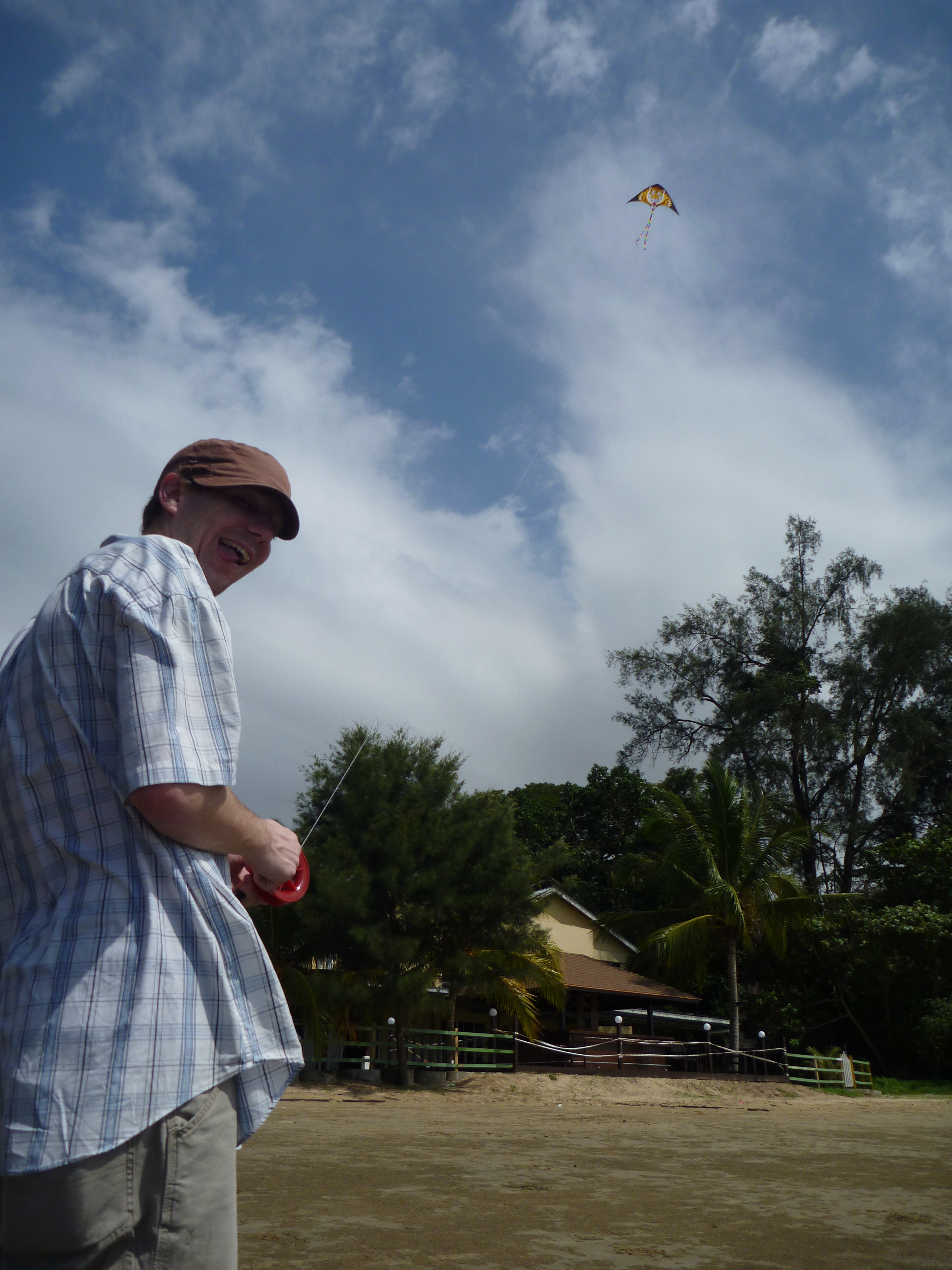
Kite flying counts as athletic activity here.  

Not knowing or at any rate caring about looming disasters such as typhoons is only the start.  Try getting the Internet hooked up.  The telecom told us that we could expect a man in two weeks.  By “Sabahan Time” that’s an acceptable standard – we know this by now – so we said tiara masala (no problem) and waited around.  We discovered all sorts of cool activities during that time.  Do you guys know about books?  Yeah, so the way it works is, you open the cover, and it’s like the Internet, except you don’t need to click on anything.  The words are there already.  It never seems to run out of power so it must run on solar or something.  Also, we discovered our apartment has a pool.

P1060662

Or did the pool discover us?  

The Internet guy never did come, although they seemed very sure that he had when we called the telecom every day that week.  Maybe they were right.

There’s also the transportation options here.  Initially, the bus was our only way into town – that’s where we go to buy flour and eggs and chicken feed and whatnot.  The bus drivers were always an interesting lot.  They usually listen to Malaysian death metal, blasting it at eleven through the paper box speakers above the heads of grandmothers.  More than once I’ve noticed a bottle of Crown Royal sitting on the dash but I think they’re just showing off.  It’s probably windshield cleaner.  The locals always laugh at us when we board.  At first I thought it was because we were the only white people on the bus.  Now I realize it’s because I always wear that shirt with the copulating pandas on Town Day.  Need to look classy for the city folk.

When I say “white people” I’m not trying to be racist.  As a couple, Fiona and I are the very model of ethnic diversity.  She is from New Zealand and I’m from America.  Two completely different worlds.  She says words like “togs” and “jandals” and “reckon” and I speak English.  Despite our best efforts to blend in, we still seem to stand out amongst the other foreigners – Chinese, Indians, and white people.

P1060392

[not racist]

Maybe it’s because most white people here have money.  Or at least a car that makes them appear to have money.  We on the other hand have a Malaysian-built duster that we’ve come to affectionately call “Drifty.”  It goes from zero to sixty kilometers, per hour.  The radio alternates between very loud and off.  Sometimes we like to listen to it on the way to work because then we don’t hear the engine so much.  One station plays Bollywood soundtracks, one plays the soft rock hits of the 1980’s, and the other five play that “Move Like Jagger” song.  The free market has done well here.

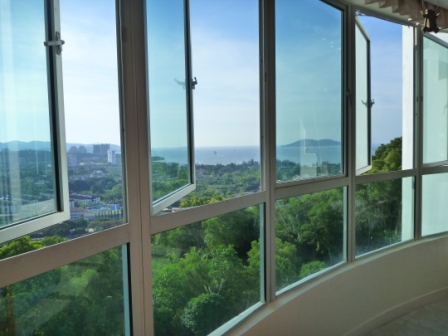
In the evenings, we like to sit at our rich white people in-house bar drinking rich white people bourbon highballs watching the sun sink over the harbor from the ninth floor bay window of our rich white people apartment.  It helps us forget that the rent we pay on this place ensures we shall be driving Drifty for a long time.

P1060596

But we do okay between salsa night…

P1060633

..and random evenings of copious drink.

At night we hear the frogs.

All night long the frogs.

In the morning, the sun presents another spectacular show through our eastern window.  This is a reminder of two things: 1.) we are living a pretty good life here, and 2.) we must really like our jobs to be waking up at 5:30 in the morning.

P1050738

Pretty lame, I know.

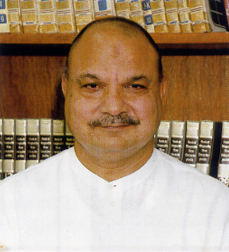
In truth, we don’t like our jobs very much at all.  The owner of the school is a gluttonous, narcissistic, highly unpleasant man who fancies himself an aristocrat.  He yells at the staff then the students every morning.  Sometimes for the sake of efficiency, he upbraids the staff in front of students.  During the Communist “crisis” of the 1970’s, he was a police chief, the sort who would’ve been responsible for ordering executions, village burnings, and other community-building activities.  Now he runs a school.  We won’t be here much longer.

DotoHjGhulamMSayeed

Honestly, the moustache should have tipped us off

Ah, but the typhoon. Crazy thing about this typhoon, while we roughed it out in the comfort of our luxurious high rise, we had forgotten all about our CouchSurfing guest who, the night before, had gone up to Mt. Kinabalu, the highest point in Southeast Asia.  The typhoon struck when she was on trail, a trail which quickly turned to mud, then to flash flood.  Whole sections of the footpath began to slide down the mountain as she scampered  down the mountain with her guide (who had assured her the looming storm clouds were “tiara masala, la”).  Most appalling were the guides they passed, leading whole groups of tourists right up the perilous peak.  Arriving back at the park hostel soaking wet and hypothermic, she asked the staff if they could offer her some emergency blankets or at least some extra towels.  No, lah.  But maybe she’d like to buy?

P1060478

In background, Mt. Widowmaker

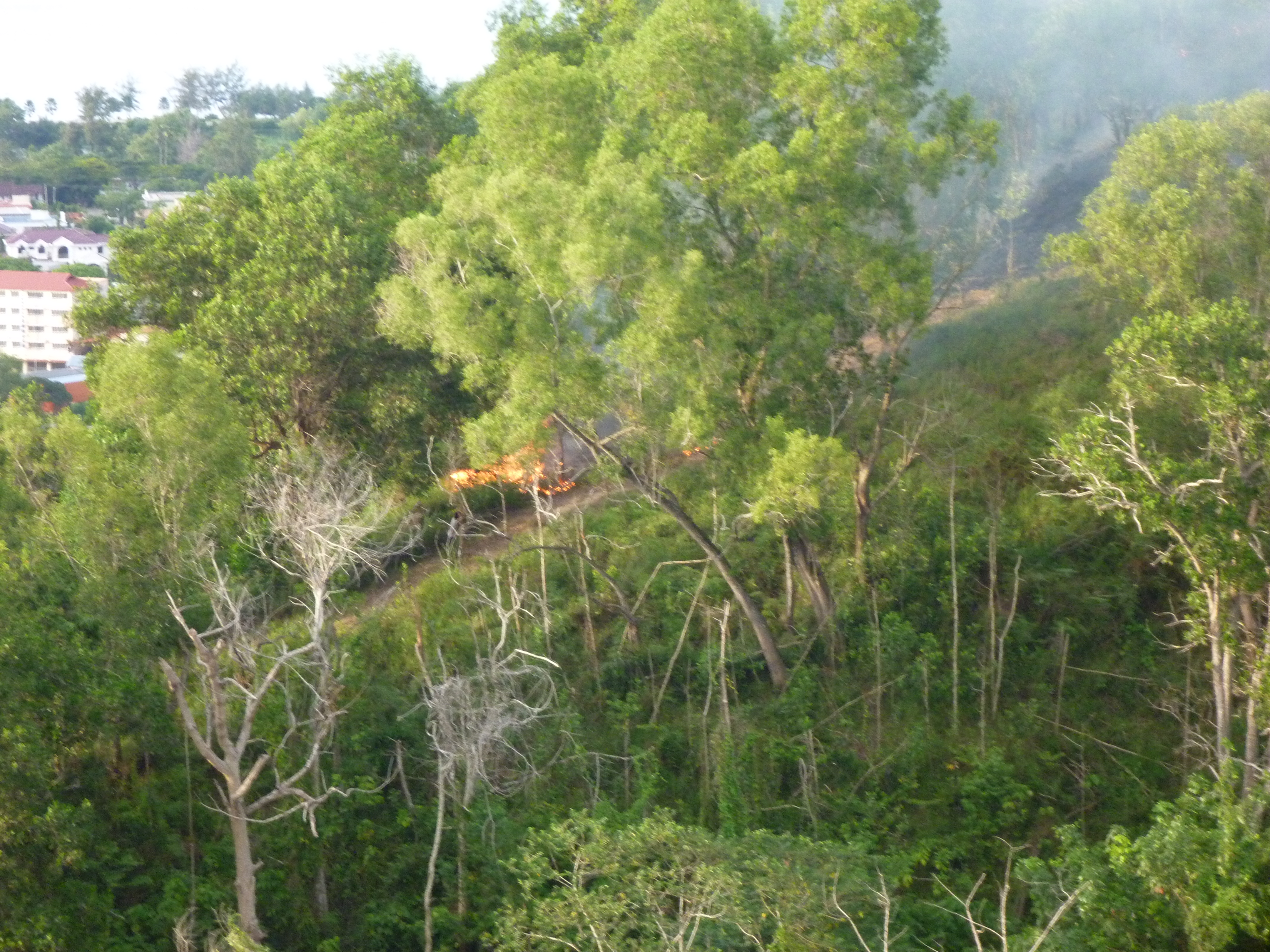
As if we needed further evidence to the other-worldliness of Malaysia, at the very same time our CouchSurfer was telling us her woesome tale, the three of us sat watching the wildfire from our living room window.  Wildfire?  Yes.  Wildfire.  That story goes something like this:

Upon arriving home that afternoon from the job we hate, we noticed the smoke above the tree line.  Our flat offered a better vantage point, good enough for us to realize the wildfire was in our back yard!  We called “Carol,” the Korean local who acted as our landlady, translator, and guardian angel in Kota Kinabalu.  English is not her strong suit however.  I tried to explain that we had a fire and needed to contact the fire department.  She misunderstood on several fronts.

“You have started fire?”

“No, Carol.  There’s a fire outside.  Right now.  We didn’t start the fire.  It was always burning.”

P1060570

..since the world’s been turning.

“You are at work?  You should tell boss.”

“No, Carol.  We’re at home, I’m looking out the window, everything is on fire outside.”

“Don’t go outside.”

“Don’t worry, Carol.  We won’t.  But do you know the number for the fire department?”

“You need to call the fire department!  There’s a fire in your kitchen?”

“No.  Carol.  The fire is outside.  We are inside.  We can see the fire outside…”

P1060568

It’s the one that’s not getting any smaller.  You can’t miss it.  

Eventually, I got the fire department on the phone (mental note: write down the emergency numbers as soon as I land in a new country) and they were as responsive as Carol.

“Turn off your stove.  Maybe is gas leak, lah.”  

It took nearly an hour, but a single fire truck rolled up.

P1060569

Our heroes!

The men who got out did not resemble firefighters.  No helmets, no mylar jackets, no hoses.  They work flip-flops and brandished what appeared to be rakes made of palm fronds.  For a long time, they stood back, contemplating the fire that had by now consumed several trees and a little more than 100 square feet of brush.  A brief discussion followed, which I am convinced involved the drawing of straws.  One man stayed behind while the others marched up the hill, rakes in hand.

What happened next I would not believe if I had not witnessed it myself.  They set about beating out the flames with the rakes and their sandal-clad feet.  The three of us sat huddled by the window, gasping, “Oh my God they’re all going to die!”  I readied my camera, expecting to capture a snuff film.

P1060575

Taken seconds before the point man burst into flame

More incredibly still, they managed in less than 15 minutes to extinguish the blaze.  Three men, three rakes, six flip-flops.

Strange days.  Malaysia is a love-hate experience.     

On that note, the frog chorus has started, monkeys begin their scampering through the jungle below, and if we bothered to get cable, I’m sure the six o’clock news would be just now wrapping up with the weather report – we’re probably missing nothing of great importance.

P1060249

Our noisy neighbors

The Barber Shop

Another short fiction.  I was reading a lot of Roald Dahl’s adult fiction at the time and felt inspired.  Further inspiration came from a strange experience in an actual Vietnamese fishing village.  

By the standards of tropical Indochina, it was your typical humble fishing town in that the streets were unpaved, the humidity and heat hung heavy on the skin, and the odors in the air were thick with dried squid and fish entrails.  Old salts, drunk on clay pot fermented rice wine, littered the lanes.  This was not the kind of town that travelers visit for the fine food, the memorable scenery, or the historical points of interest.  However, the occasional tourist, lost, confused, or curious, may stray from the bus station from time to time.  So it was with Ignatius and his companion Adeline.

The two lovers stepped gingerly between the mud ruts left in the road by the old diesel lorries that carted mackerel, trout, and shrimp away from the boats each day.  They took care not to tarnish their designer shoes with grime or guts, but with very little success.  Still, they were vacation, they were away from the freezing cold of their home country, and therefore, they were happy together.  They were the sort of cute couple that made single people barf into their own laps.

There were never more obvious tourists in the Mekong Delta.  With their pasty white skin, now partially pink from the harsh equatorial sun, and oversized sunglasses, which made their goofy grinning faces look ridiculously bug-like, these two stuck out like kitty cats at a dog show.  The local Vietnamese fishers watched them with mild, brief curiosity as they passed, far more concerned with offloading their catch from that day.

As Adeline photographed her billionth picture of a dead fish (“My friends will simply never believe I set foot in a place like this!” she remarked again and again), Ignatius noticed a tiny shop front with a single barber chair.

“Darrrrrling!” he said with a chipper, but fake, British accent, “We’ve been on the road for what, two weeks now?  I believe I could go for a haircut.”

“Oh lovey-dove,” she replied, “As much as I adore your scruffy man-chin, nothing would make me happier than kissing your handsome, smooth cheek once more, free of prickly hair.”

It was decided.  Ignatius sat down and with a magnificent display of flair and volume, said to the barber, “A little off the top, and a razor to the beard, my good man.”

The barber set to work immediately, his hands swiftly moving like a card dealer in a Macao casino.  He worked with such explosive passion that tufts of hair flew into Adeline’s face.  Coughing out a hairball, Adeline announced she would be leaving to photograph more dead sea life, and would return within the half-hour.

Upon returning, she saw her boyfriend’s face and dropped her camera in shock.  Before the haircut began, he was only mildly good-looking, but she always had kept that ungracious thought to herself.  Now though, Ignatius looked… well he looked like a bona fide super model, straight out of those fashion magazines at fancy hair salons!

His hair was bobbed in a perfect wave, just like one of those fine fellows from Hollywood.   His face was so smooth, baby gerbils could ice skate on it.  More than this, his teeth were white and neatly arranged as a dinner set, his eyes had gone from a sky blue to the sort of blue one sees on the planet Venus, and… was it possible?  Yes, his biceps and pectorals had definitely grown, making Ignatius look more like an Olympic finalist than the pot-bellied architect he was in real life.

“What do you think, honey?” he asked in a voice that sounded somehow more masculine, more self-assured.

“We must be sure to tip the man,” she replied, slightly distracted by Ignatius’s perfectly manicured fingernails.

They still had some time before their bus left for bright beautiful cities, far from this Podunk wharf town.  Adeline suggested they grab a quick bite to eat.  Ignatius agreed, adding, “My barber suggested an excellent place for lunch.”

Just a stone’s throw from the waterfront, they soon settled into a humble café.  Adeline still couldn’t believe the remarkably changed appearance of her boyfriend.

“Sugar bee, I must say, that barber did incredible work.  I could just stare at you all day.  I mean, how did he—”

She was cut off when the waiter brought out menus.  They were written completely in the local language and contained no pictures of the food.  Adeline was relieved to hear Ignatius say, “Don’t worry, my love.  The barber also taught me some basic Vietnamese.  I know exactly what to order.”

With expert pronunciation, Ignatius proceeded to communicate fluently with the waiter.  As he left, Adeline picked up where she had left off.

“Ah, so what I wanted to ask was, how did this barber do so much… work?  I mean, your hair, your shave, I get that.  It’s just… if you’ll forgive me for saying so, you have never looked this good.  Ever.”

“Well, I’ll tell you a little secret,” Ignatius responded.  “The barber is also a plastic surgeon and voodoo priest.  Because his skills were so highly prized, rich and powerful men fought over him as their exclusive barber.

“Entire wars were fought for this man!  You know how Vietnam has had wars with France, America, Cambodia and China in the last 100 years?  Did you ever wonder why?  It’s because of this guy.  This seemingly simple barber is the most powerful man in the world.

“Because he felt such guilt over the tens of thousands of people who died in his name, he went into hiding.  He has worked a two-stool barber shop in this no-name fishing town for the last several years, no one the wiser.”

“I’m sorry my darling, but did you say ‘voodoo priest’?  Isn’t that like, black magic?” asked Adeline.

“Oh muffin butt, don’t worry your pretty little head about such things,” Ignatius said.  “He knows exactly what he’s doing.  All he had to do was cut me open, swap out a few organs, cast some spells… honestly, I don’t remember much when I think about it.  But look at me now!  Devilishly handsome!”

Just then the food arrived, two bowls of soup, smelling of the sea.  Ignatius hungrily began swirling his chopsticks in the musky, murky broth.

Adeline was still visibly concerned.  “Sweetie, it’s just that I don’t like the idea of a man cutting you open.  I mean, what if he changed some things that can’t be reversed?  What if…”

Her voice trailed off as she noticed Ignatius lift his chopsticks from the bowl.  He began slurping away at – noodles?  No.  Those… are… wriggling worms!

“Like I said already, poochie kins,” he said through mouthfuls of live bait, she noticing for the first time him breathing through the gills astride his neck, “it’s just a few changes he made.  You’ll get used to the new me in no time.”